Something dark shows up on your skin, maybe bringing worry too. Not every flat shade acts alike, even if they look alike. Melasma shows up wide, often tied to the sun or hormones. Pigmentation pops up in smaller areas, sometimes tied to ageing or scars. Even if they appear alike, their origins, severity, and management diverge sharply. This duality means applying an unsuitable approach often deepens issues rather than helping.
Brown or grey spots show up on the face when melasma hits. Women tend to deal with it more often, especially under hormone swings and sun exposure. Skin coloring changes might appear in anyone, however. Sometimes it shows up once acne fades, after sun damage, or following skin trauma. Treatment works well if the diagnosis is accurate – safety comes through proper identification.
So, beginning by recognizing your current state matters above all else. This resource aims to clarify how melasma differs from pigmentation using clear explanations. Because specialized treatment makes a difference, it outlines why seeking expert help counts, also highlighting how effective approaches such as melasma and pigmentationtreatment in Hyderabad can return a clearer, well-balanced complexion.
Start here, getting familiar with melasma before moving ahead.
What Is Melasma
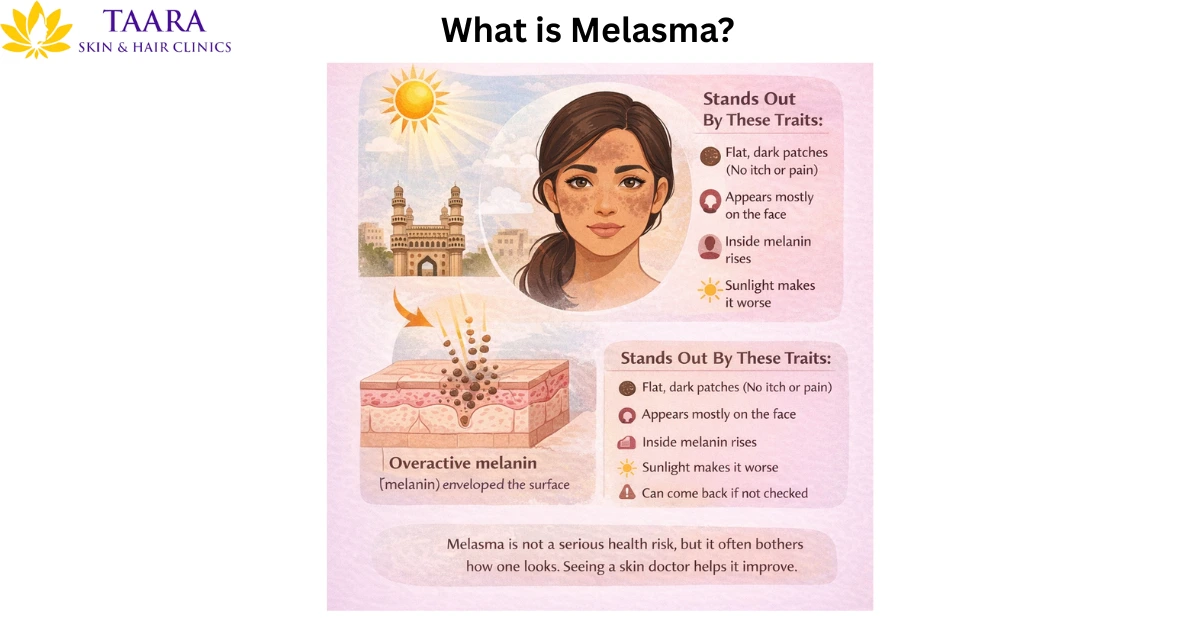 Melasma appears as flat brown or grey patches on the skin, usually on the face. These patches often show up on both sides of the face. That kind of balance hints at shared causes across both sides. Melasma tends to appear on areas like the cheeks, forehead, nose, and upper lip more than other places.
Too much melanin forms inside skin cells, thanks to overactive production. That added pigment sinks below the surface, making melasma tougher to tackle. Bright sunlight kicks it into action. Sunlight, brief as it is, still makes skin patches lose their brightness.
Besides that, shifts in hormones matter too. Lots of women see melasma show up when they’re pregnant, using birth control pills, or getting hormone-based treatments. That’s why melasma often gets called the “mask of pregnancy.”
Melasma stands out by these traits:
- Folks sometimes spot dark flat spots – no itch, no hurt
- Face takes the brunt of it
- Sunlight makes it worse.
- It can return if left unchecked.
Melasma doesn’t pose a serious health risk, yet it may still shake how someone feels about their appearance. Because it resists change, seeing a specialist makes sense. A well-planned path including options like melasma and pigmentation treatment in Hyderabad can lead to steady results over time.
What Is Pigmentation
Dark patches show up when skin gets darker, this is what pigmentation means. Not limited to melasma, these changes happen across many parts of the body. Sometimes they appear as small marks, sometimes as flat zones, and other times just a shift in how color spreads across the surface. From pale brown to deep black, the shade shifts.
When melanin builds up, it may mark areas affected by injury or inflammation. Sunlight often triggers this change. Still, spots left by acne, burns, sensitivities, or strong beauty routines might appear, too.
Some pigments act like melanin, others come from natural dyes in the skin. Each behaves in its own way when light hits it.
- Sunspots caused by UV damage
- Scars from zits that fade but stay visible
- Freckles that darken with sun exposure
- Post-inflammatory pigmentation after injury
Freckles or age spots tend to sit just at the skin’s surface. That position helps them react quicker to removal than something like melasma. Given the right attention, darker spots can slowly vanish from view.
Still, leaving pigmentation alone or fixing it poorly might push it deeper, shadier. That’s why catching issues early – plus doing therapy right counts so much. Doctors who focus on skin often spot underlying reasons fast, then walk you through gentle fixes.
Melasma vs Pigmentation: Key Differences
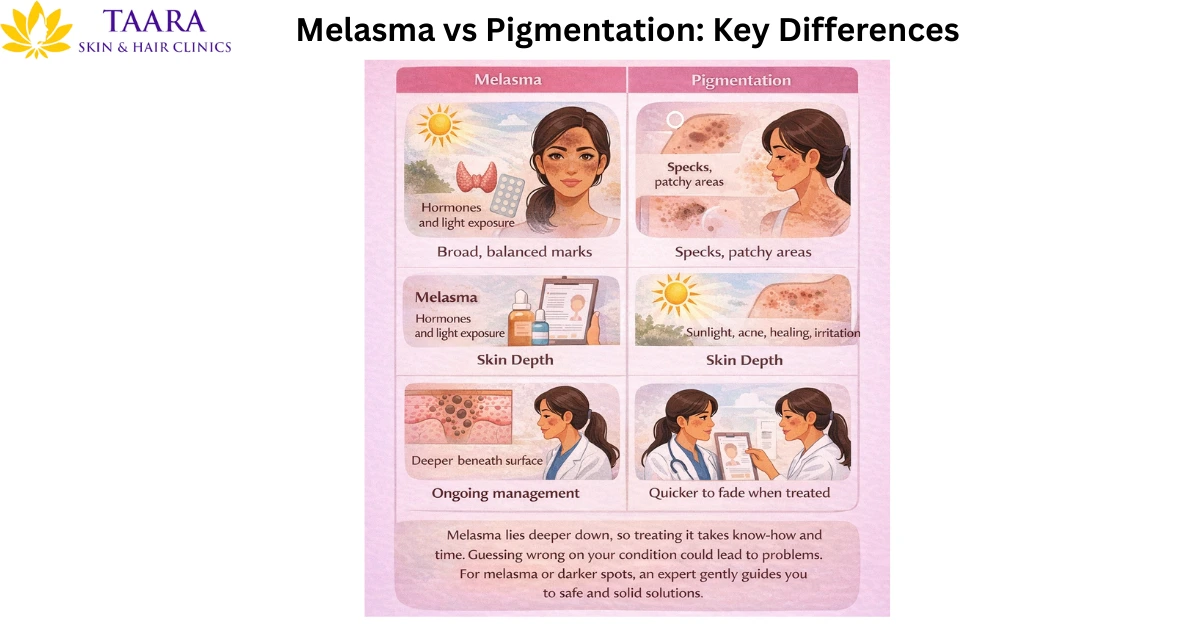 Melasma and skin pigmentation share similar appearances but remain distinct conditions. Knowing the difference helps you choose the right treatment. What sets them apart shows up next.
Appearance
- Melasma shows broad, balanced marks
- Pigmentation shows up in specks or patchy areas
Causes
- Melasma ties into hormone shifts plus exposure to light
- Melanin comes when skin faces sunlight, spots from acne, healing after injury, or reactions from irritation
Skin Depth
- Melasma penetrates the skin’s deeper layers
- Pigment often sits just beneath the skin’s outer layer
Treatment Response
- Melasma demands ongoing management
- Pigment disappears more quickly when treated
Melasma hides beneath the surface, so handling it needs patience and precision. Harsh lotions or quick fixes might make things worse instead. Sun shielding plus gentle routines tend to soften skin marks over time.
That is why guessing your condition might lead to trouble. Something good for skin color could fail when melasma is involved. An experienced skin professional knows the signs well enough to steer you right without risk.
How to Identify Whether You Have Melasma or Pigmentation
Checking websites might seem like a good idea when skin problems show up. Yet, scrolling through endless posts rarely clears things up. Certain cues still manage to hint at what is happening beneath the surface.
Signs showing melasma might include:
- Something shows up on one side of the face. Then it appears on the other too
- A dull grey or brown fills the scene. That hue dominates without much change.
- Darkening increases with sun exposure
- No history of acne ever showing up in that zone, just clean skin
Signs showing skin color changes:
- Marks show up once pimples or wounds have gone
- Not quite symmetrical in layout
- It might show up just about anywhere when it comes to skin spots
- Things dim gradually into nothing
Still, just guessing on your own isn’t sufficient. Each person shows distinct skin color, melanin levels, and what sets off reactions. For accurate confirmation, a board-certified skin expert must assess you with reliable testing methods.
Spotting issues soon stops wasted effort and avoids errors. If caught right away, solutions work better while lowering risks.
Why Proper Diagnosis Matters for Treatment
Wrong treatments might affect your skin. Some individuals put powerful creams on their skin without realizing their situation. It may result in heat sensations, inflammation, or uneven coloring.
Melasma often responds poorly to harsh therapies. Instead of getting better, it might become worse. Skin color may lighten briefly yet come back if the underlying issue stays unchecked.
Knowing the real issue leads to better decisions.
- Identify pigment depth
- Start by seeing what really started the problem.
- Pick responsible care methods
- Prevent recurrence
A dermatologist designs a plan based on your skin type and lifestyle. This approach gives better and long-lasting results. Clinics offering melasma and pigmentation treatment in Hyderabad focus on accurate diagnosis before starting therapy.
Getting treatment right doesn’t just remove symptoms, it keeps your skin healthier long term.
Best Melasma Treatment in Hyderabad
Melasma demands careful handling along with time. A single fix does not exist, yet strong control remains possible. In Hyderabad, melasma treatment clinics rely on mixing methods to achieve quality outcomes.
Treatment choices are:
- Prescription creams to control pigment
- Chemical peels are carried out with oversight
- Advanced laser treatments for deeper pigment
- Strict sun protection plans
Just as key is what you do every day for your skin. In or out, sun protection always matters. Following a solid skincare routine can keep outbreaks from happening.
When it comes to managing high blood pressure, even small daily adjustments to your routine can have a significant impact. Reducing pressure through calm habits helps lower risk without strict rules. Skipping long, hot showers cuts strain on vessels over time. Listening closely to health experts adds clarity beyond internet tips. Slow adjustments add up where rush and neglect leave gaps.
Starting strong, melasma control grows easier with proper advice and steady check-ins. Confidence builds when steps are handled carefully over time.
Pigmentation Treatment Options
What drives pigmentation decides how it’s tackled. Light cases tend to work with surface creams plus smart sun habits.
Common options include:
- Brightening creams
- Chemical peels
- Laser therapies
- Gentle exfoliation
What sticks matters most. Outcomes move slowly, yet signs often show up quicker than with melasma care. Skip household treatments if they stir up skin reactions instead.
Your skin type might affect which one works best. A dermatologist could help figure that out.
When Should You Visit a Dermatologist
Seeing a dermatologist makes sense when
- Fading stops when dark patches appear
- Marks grow or become heavier
- Home remedies often do little good
- Skin becomes sensitive
Starting treatment early gives better results and helps avoid problems. With expert care, melasma and pigmentation treatment in Hyderabad is safer, more effective, and better for long-term skin health.
Final Thought
Melasma and pigmentation aren’t the same, despite their outer resemblance. Starting with an accurate diagnosis builds solid skin care. When handled by a skilled professional using tailored strategies, both issues respond effectively.
When it comes to skin issues, knowing where to start might feel unclear. Talking with someone trained in treating melasma and pigmentation treatment in Hyderabad could guide you toward smoother, more confident results.