Hair loss can be stressful, but when it happens because of hormones, it can feel confusing and frustrating too. Many people first try home remedies or over-the-counter shampoos. Some go to salons hoping for quick fixes. But without proper hormonal hair loss treatment, the root cause remains untreated and hair thinning may continue slowly over time.
But hormonal hair loss is different. It usually needs careful assessment and medical guidance. If ignored, hair fall can worsen over time. This blog explains hormonal hair loss, how doctors check it, and what treatment actually works in a simple and honest way.
Why People Often Confuse Hair Fall Causes
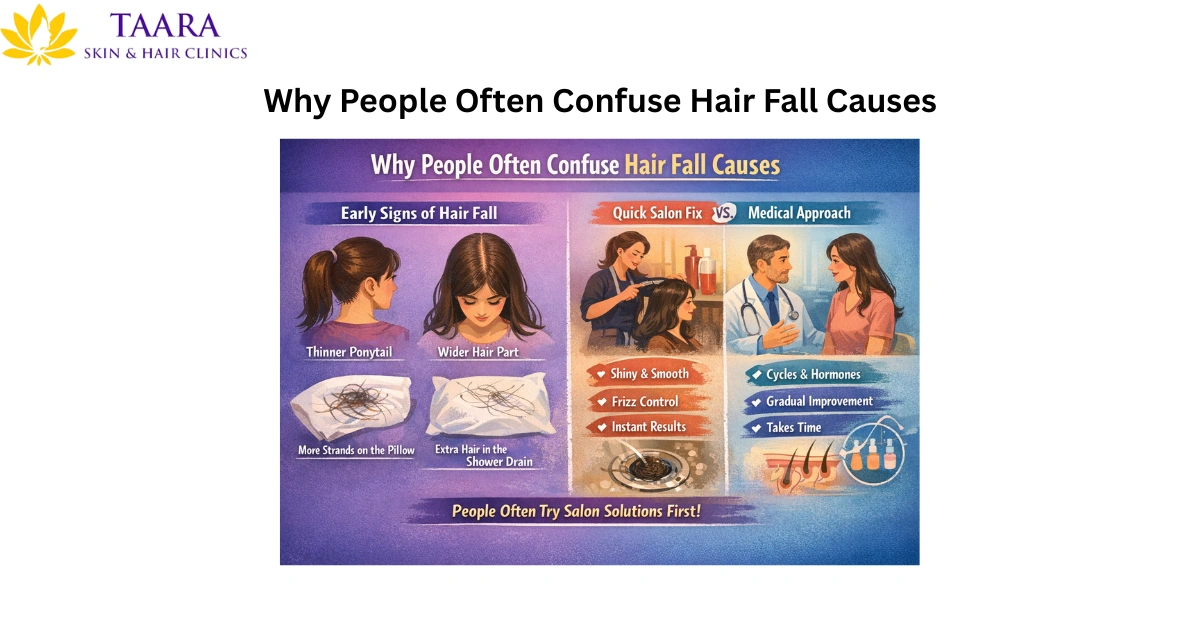
Hair fall does not happen overnight.
You may notice:
- Thinner ponytail
- Wider hair part
- More strands on the pillow
- Extra hair in the shower drain
At this stage, hair can still look fine externally. Many assume it’s a styling or care issue. Salons promise quick results. They offer treatments just for shine, smoothness, and frizz control to Hair. Doctors, on the other hand, they treat and talk about cycles, hormones, and gradual improvement. This can feel slow, so many try salon solutions first.
How Salons Treat Hair Problems
Salons mainly focus on visible hair issues:
- Dryness
- Frizz
- Rough texture
- Dull appearance
- Split ends
- Breakage
Common treatments include:
- Hair spa
- Smoothening
- Keratin treatment
- Protein masks
- Oil massages
- Anti-hair fall packages
These can make your hair look softer, shinier, and also manageable. But these salons do not check hormone levels and also scalp health, or follicle function. That is why results can be temporary.
How Doctors Look at Hormonal Hair Loss
Hormonal hair loss is not just about the strands you see.
Doctors examine:
- Pattern and speed of hair fall
- Scalp condition
- Family history
- Duration of hair loss
- Menstrual cycles or menopause
- Lifestyle factors
- Medical history
Hair fall from hormones often starts silently. By this time you notice it, follicles may already be thin. Doctors focus on control first, then improvement.
The Biggest Difference: Appearance vs Cause
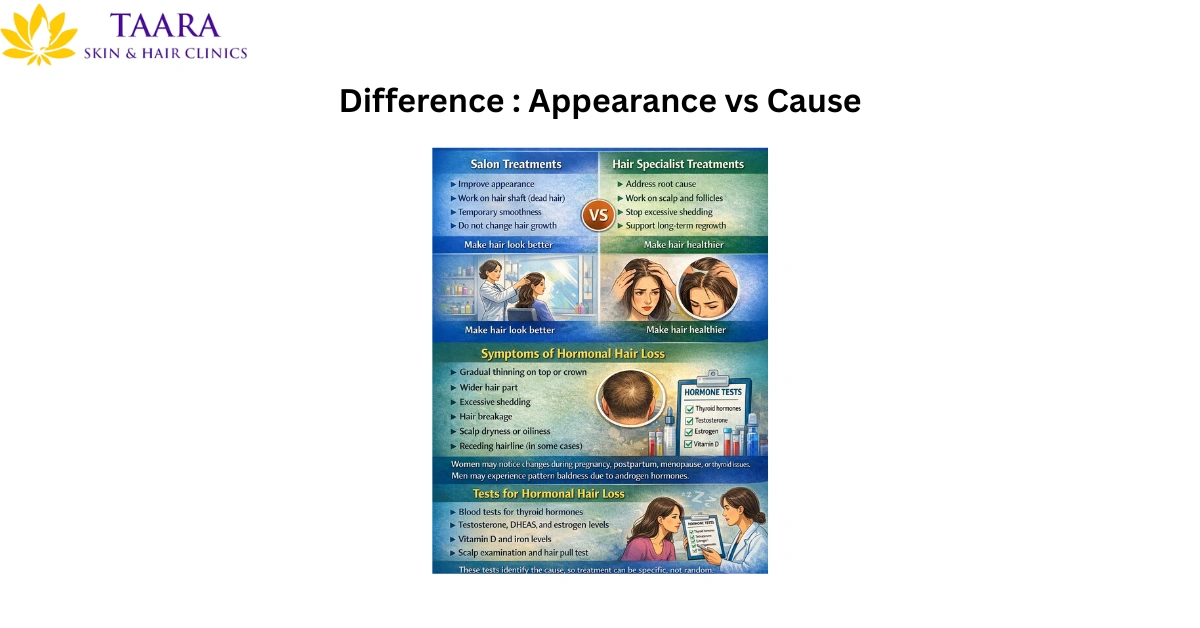
Salon Treatments:
- Improve appearance
- Work on hair shaft (dead hair)
- Temporary smoothness
- Do not change hair growth
Hair Specialist Treatments
- Address root cause
- Work on scalp and follicles
- Stop excessive shedding
- Support long-term regrowth
Salons make hair look better, doctors make hair healthier.
Symptoms of Hormonal Hair Loss
Hormonal hair loss may show as:
- Gradual thinning on top or crown
- Wider hair part
- Excessive shedding
- Hair breakage
- Scalp dryness or oiliness
- Receding hairline (in some cases)
Women may notice changes during pregnancy, postpartum, menopause, or thyroid issues. Men may experience pattern baldness due to androgen hormones.
Tests for Hormonal Hair Loss
A hair specialist may recommend:
- Blood tests for thyroid hormones
- Testosterone, DHEAS, and estrogen levels
- Vitamin D and iron levels
- Scalp examination and hair pull test
These tests identify the cause, so treatment can be specific, not random.
Why Salon Results Often Don’t Last for Hormonal Hair Loss
Many people say like “I tried a hair spa, but hair fall continued.”
This happens because:
- Hormonal imbalance is not addressed
- Only surface conditioning is done
- Follicles remain weak
Hair loss from hormones cannot be treated by creams or masks alone. It needs targeted medical care.
What Hormonal Hair Loss Treatment Actually Includes
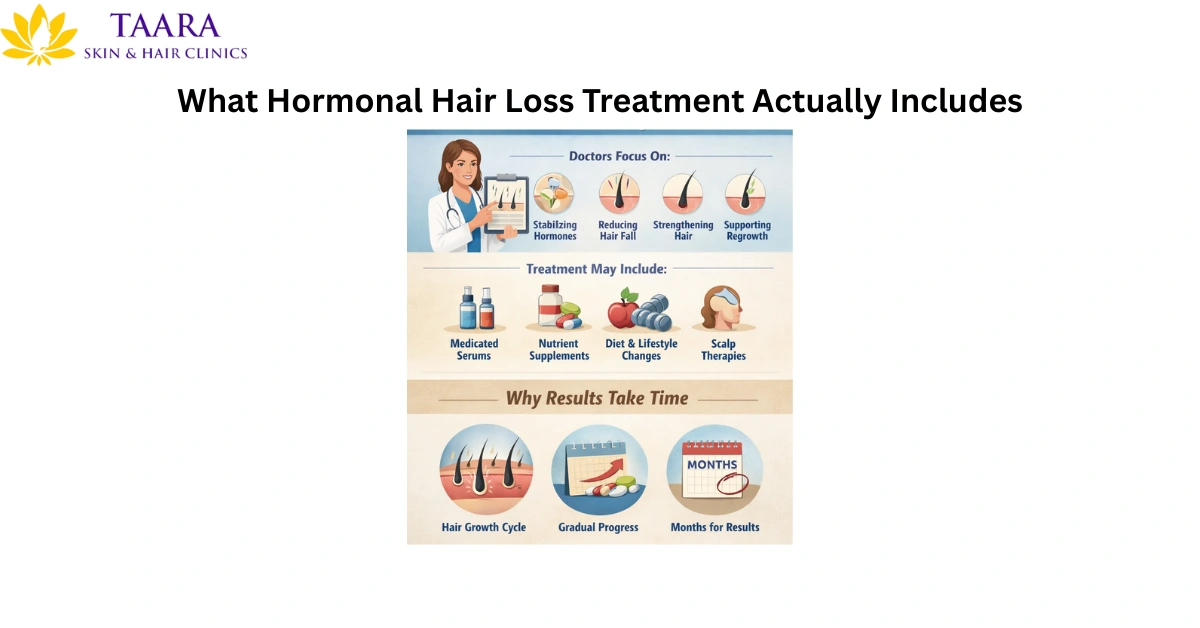
Doctors focus on:
- Stabilizing hormone levels
- Reducing active hair fall
- Strengthening existing hair
- Supporting natural regrowth
Treatment may include:
- Medical lotions or serums
- Supplements for nutrients
- Lifestyle and diet adjustments
- Scalp therapies
- Stress management
Everything is planned gradually and personalized.
Why Results Take Time
Hair grows slowly. Hormonal balance also needs time.
Doctors explain:
- Hair has a growth cycle
- Improvement is gradual
- Visible results appear over months
Medical hair care is about stability and long-term health, not instant shine.
Hair Specialist vs Salon: A Simple Comparison
Salon:
- Works on hair surface
- Temporary improvement
- Cosmetic focus
- Same treatment for many
Hair Specialist:
- Works on scalp and roots
- Long-term control
- Medical focus
- Personalized treatment
Both have roles, but they are not interchangeable.
When to Consult a Hair Specialist for Hormonal Hair Loss
You should see a doctor if:
- Hair fall lasts more than 2-3 months
- Thinning is visible
- Family history of hair loss
- Scalp issues persist
- Salon treatments do not help
Early consultation gives better control and prevents permanent damage.
Can Salon and Medical Treatments Work Together?
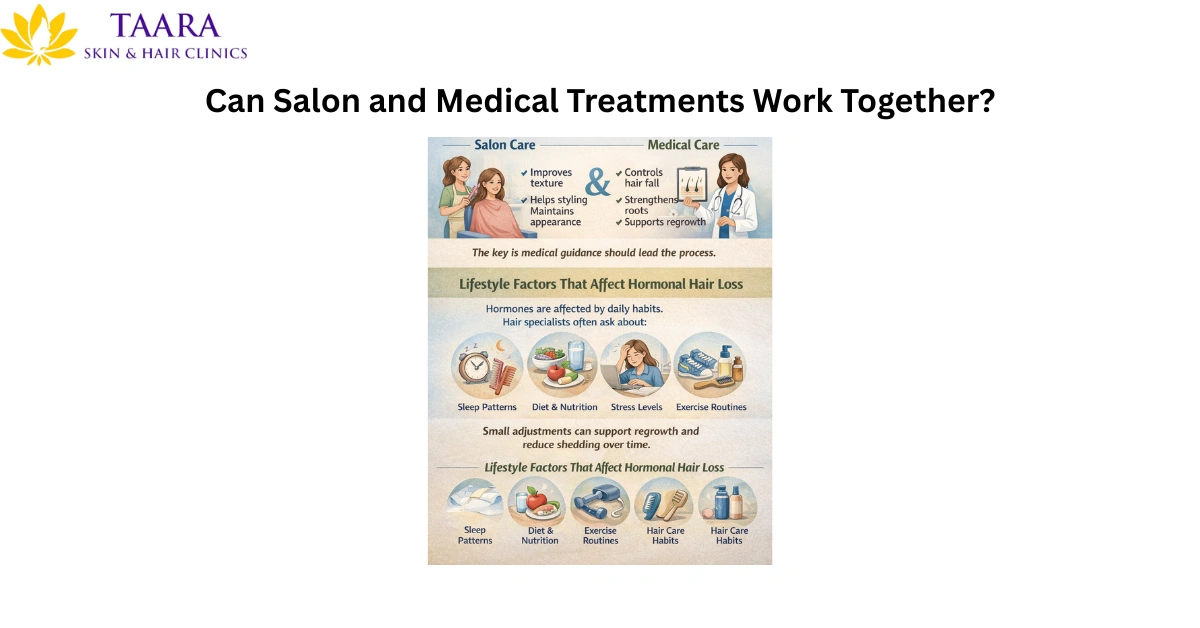
Yes, but carefully:
Salon care:
- Improves texture
- Helps styling
- Maintains appearance
Medical care:
- Controls hair fall
- Strengthens roots
- Supports regrowth
The key is medical guidance should lead the process.
Lifestyle Factors That Affect Hormonal Hair Loss
Hormones are cured by daily habits.
Hair specialists often ask about:
- Sleep patterns
- Diet and nutrition
- Stress levels
- Exercise routines
- Hair care habits
These lifestyles like Poor sleep, high stress, or nutrient deficiencies can increase your hormonal hair loss. Doctors guide these changes gradually. Even if a small adjustments can support hair regrowth and reduce shedding over time.
Myths About Hormonal Hair Loss
Many people believe things that are not true:
- “Stress is the only reason for hair fall.”
- “Hormonal hair loss happens only after menopause.”
- “Shampoos can fix hormone-related hair loss.”
- “Hair loss will stop on its own.”
These myths delay proper care. Doctors clarify what is real treatment and what is cosmetic thing, so patients can easily focus on effective treatment, not just by any guesses.
Preventing Hormonal Hair Loss in the Long Term
Prevention is possible if these steps are taken early:
- Regular check-ups with a hair specialist helps to clear the issue
- Balanced diet and supplements if needed for your issue
- Stress management techniques need to be followed
- Gentle hair care routines
- Avoiding more chemicals and heat treatments
Early action keeps the hair roots strong and helps to reduces shedding and improves the chances of long-term regrowth.
Where Hair Needs the Right Kind of Care
Hormonal hair loss is often misunderstood and not all hair fall is cosmetic and not all hair fall is medical. Using one in place of the other causes delay and damage. Salon treatments improve appearance. Hair specialists improve growth. Understanding the difference which helps to save time, money, and hair.
Take the Right Step with Hormonal Hair Loss Treatment which gives you proper results. If hair fall has been worrying you and the salon treatments no longer is helping for you, it’s time to stop guessing and this is the time to take a proper decision.