Happiness often follows someone buying a cream for dark spots. Right away, the skin improves slightly. Lighter seem the spots. Even now, you keep applying the cream each morning.
Yet after a while, the cream loses its effect. Those deep stains remain behind. In truth, they might still grow heavier. Unsettling news brings discomfort along with unclear thoughts.
If this is happening to you, do not worry. You are not alone. Many people face the same problem. When creams stop helping, it may be time to think about a professional face pigmentation treatment.
In this blog, you will learn:
- Why pigmentation happens
- Why creams stop working
- When you need expert help
- The best face pigmentation treatment options
- How to stop pigmentation from coming back
Here’s how it goes, one thing at a time.
What Is Face Pigmentation
Dark spots or skin shading that does not match can appear on the face. Melanin becomes overactive, causing these patches. Skin tone often turns uneven because of it.
Melanin gives your skin its own natural shade. If melanin grows stronger than usual in a single spot, that place turns darker. Skin changes show up often, no exception here. Everyone might see them appear somehow.
Common Types of Pigmentation
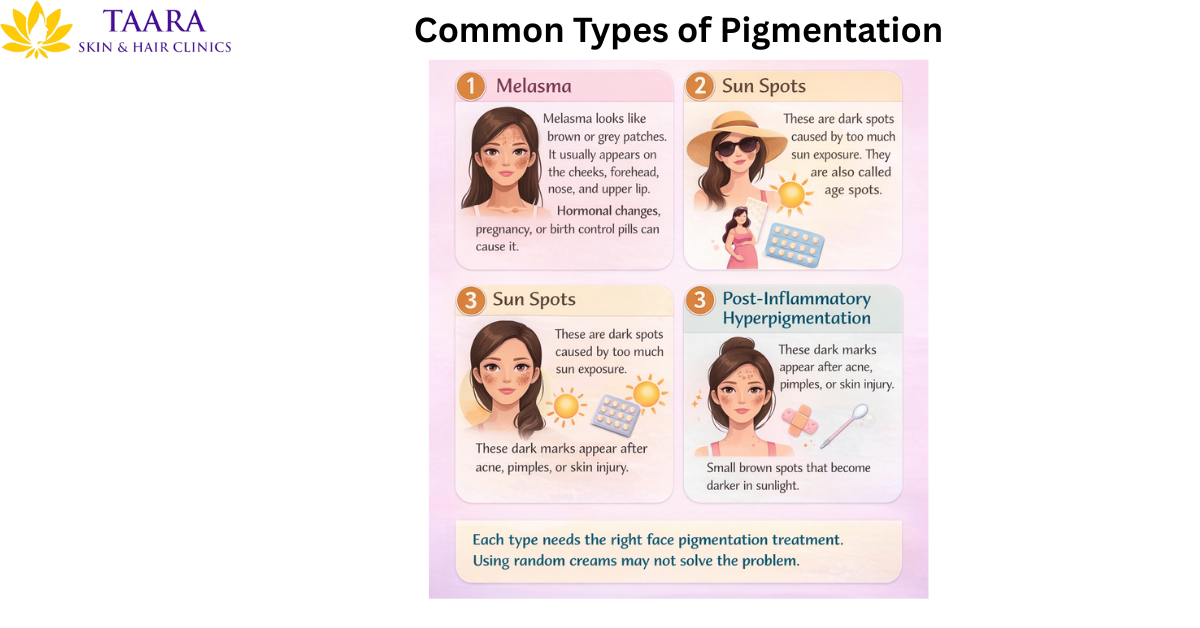 Some pigments respond better to certain routines. Figuring out which one fits matters most.
1. Melasma
Melasma shows up as dark spots, sometimes gray. You often see it on the cheeks, forehead, nose, and top part of the lip.
Shifts in hormones, maybe pregnancy, perhaps birth control sometimes led to this. Not always clear but often tied to inner body adjustments.
2. Sunspots
Sun damage often leaves behind flat dark patches. These marks go by several names, age spots being one of them.
3. Post-Inflammatory Hyperpigmentation
Black spots show up once acne, zits, or skin damage fade.
4. Freckles
Faint tan marks turn richer when sunlight hits them.
One kind of skin issue responds best to specific pigment therapies. Trying different lotions at a guess won’t fix it every time.
Why Creams Stop Working
Some rely strictly on lotions. Yet those won’t remove stubborn skin color issues every time.
Creams often lose effectiveness because of a few key issues.
1. Pigmentation runs thick
Sometimes, skin creams stay within the outer layer. When melanin goes further below, those creams just cannot get through.
2. Using the wrong cream for your skin issue
Pigment behaves differently every time. What clears acne scars could leave melasma untouched.
3. Hormonal Causes
When hormones play a role in skin coloring, relying only on creams falls short.
4. Too Much Sun Exposure
Skin gets darker when sunlight piles up each day. Protective lotions work poorly if clouds of UV stay overhead.
5. Skin grows accustomed to the cream.
When stuff gets used again and again, skin can lose its reaction to what’s in things we put on it.
6. Overuse of Strong Creams
Not every person checks with their doctor before trying steroid creams. Quick improvements can happen. Still, over time, skin health tends to deteriorate. Dark spots often grow more intense too.
If creams no longer work, then deeper solutions need attention. Advanced treatments become possible when standard options fail.
Signs You Need Professional Help
See a skin expert when:
- Freckles or dark patches take around three to six months to disappear
- Skin tones are shifting
- Skin seems too light, maybe even red along the edges
- You see redness or burning
- Spots return after stopping creams
Starting care soon leads to stronger outcomes. Waiting too far brings less gain.
Best Face Pigmentation Treatment Options
Skin looks at its own kind and how deep the color goes. After seeing that, a doctor picks what needs to happen next.
These are usual ways work gets handled at job places.
1. Chemical Peels
They put a certain liquid down for you during this process. That removes the broken outer layer.
This helps:
- Brighten up dark areas
- Improve skin tone
- Make skin smooth
Results might come slowly, sometimes taking multiple visits to show up well.
2. Laser Treatment
Follicles respond when light energy reaches them. Melanin breaks down after laser exposure. Skin clarity often improves as a result.
It works well for:
- Stubborn melasma
- Deep sunspots
- Old pigmentation
Laser is a popular and effective face pigmentation treatment for long-term results.
3. Microdermabrasion
A soft way to smooth the skin. Removes the outer layer, especially dead cells.
It holds up when:
- A faint speck of color
- Dull skin
- Acne marks
Over days, it lifts the look of your skin tone.
4. Medi-Facials
A medical facial stands apart from everyday spa treatments. Done with professional guidance, it brings deeper results.
They help:
- Improve skin glow
- Light skin spots can be less noticeable
- Keep outcomes steady after care
5. Prescription treatments
Creams from doctors might come together in special mixes. These versions are more powerful, watched closely, and works better when handled right.
Things like:
- Vitamin creams
- Mild exfoliating agents
- Skin-lightening formulas
Most times, people try this kind of skin stain treatment only after talking with a skin expert.
How Doctors Choose the Right Treatment
Guessing has no place in medicine. What happens is someone watches closely
- Your skin type
- Your past health issues
- The cause of pigmentation
- The depth of pigment
Following that, they build a custom treatment strategy. Outcomes tend to be improved and less risky when done this way.
Benefits of Professional Face Pigmentation Treatment
Fear often holds people back from getting help. Yet skilled treatment offers clear advantages.
1. Faster Results
Professional treatments go further than lotions ever could.
2. Safe Procedures
They follow proven ways.
3. Long-Lasting Improvement
Stuff stays good longer if handled right.
4. Fewer risks exist
Looking after your skin helps lower harm from problems.
5. Boost in Confidence
A smoother face often means feeling better about yourself.
A fresh start happens if skin pigmentation treatments go just right.
Aftercare Is Very Important
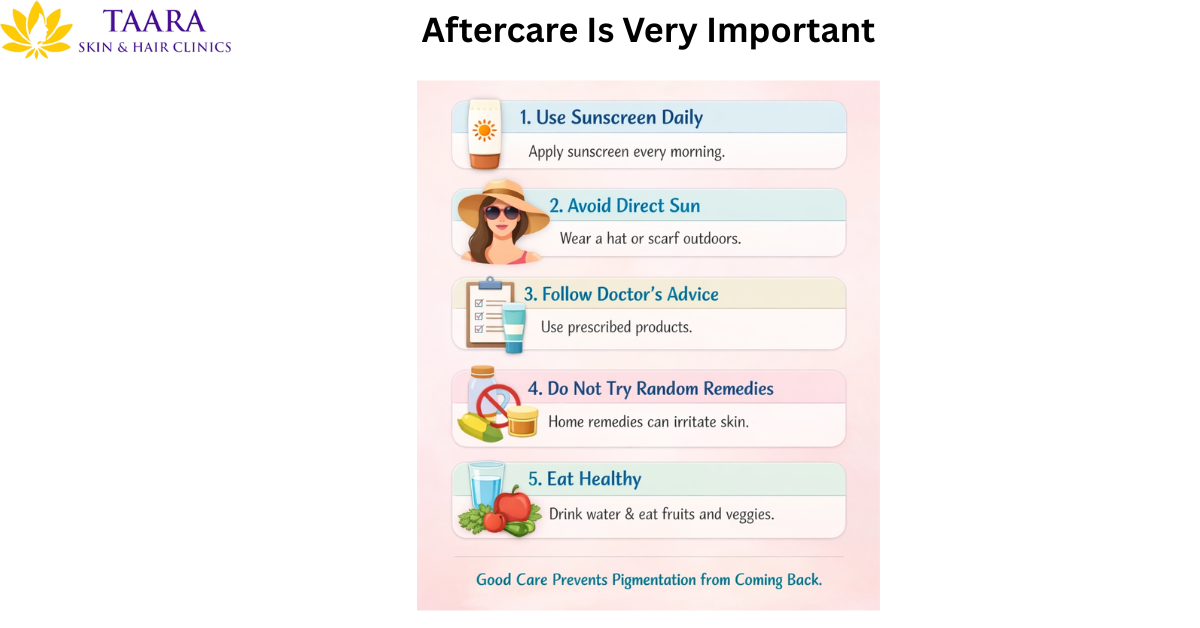 Treatment alone is not enough. Aftercare protects your results.
Now, here’s your next step
1. Use Sunscreen Daily
Every morning, put sunscreen on. Staying home doesn’t mean you’re safe from harm.
2. stay away from direct sun light
Wear a hat or scarf when going outside.
3. Follow Doctor’s Advice
Apply creams and gels as instructed. Stay on track each day.
4. Do Not Try Random Remedies
Some home treatments could stir up skin trouble.
5. Eat Healthy
Stay hydrated by drinking water while adding fruits and veggies into your meals.
Skin stays clearer when proper care keeps pigmentation from returning.
Common Myths About Pigmentation
Some People think things that aren’t quite right.
Myth 1: Natural Remedies Always Work
That isn’t true every time. Your skin might react badly to lemon or baking soda.
Myth 2: Laser Makes Skin Thin
Not. Safety comes through proper use of lasers. It works well that way.
Myth 3: Pigmentation Goes Away in One Session
Treatment often spans more than one visit.
Myth 4: Only Women Get Pigmentation
Men also face pigmentation problems.
Understanding facts helps you choose the right face pigmentation treatment.
Can Pigmentation Come Back
It might come back. That happens under certain conditions
- You skip sunscreen
- Hormones shift
- Stopping upkeep efforts
Too often, your skin meets direct sunlight. That repeated contact sets harm in motion.
So, staying in touch often makes a difference.
When Should You Visit a Dermatologist
See a skin specialist when
- Dark spots are growing thicker
- You feel burning or itching
- Skin creams used at home haven’t improved things
- You feel stressed about your skin
Starting early helps save both money and hours.
Final Thought
Skin turns up dark more often than not. Still, dealing with it every day isn’t required. Starting out, creams might bring some relief. Yet if those creams lose their effect, give up slowly. Stronger ways to tackle skin coloring issues exist beyond basic steps.
A proper diagnosis plus skilled treatment might bring back healthier, balanced skin. Skin stays healthy when care matches what it needs. Timing plays a bigger role than most realize. When dark spots won’t go away, it could indicate needing expert support. Proper guidance and attention lead to clear skin.