Typically, people do not openly or casually search for a “hair doctor near me”. Not out of curiosity. Not cautiously. It is hardly ever a decision that is made in advance. For many, it is a scenario that unfolds in their minds late at night when the day has been long and tiring. While the rest of the house is silent, the brain is working at full speed. Hair fall, which used to be so minor that it was simply disregarded, has suddenly become a matter that can no longer be avoided.
That hair which was removed from the comb seems to be a pretty large amount. The shower drain is again, as always, blocked. At present, there is more hair on the pillow than there was before. The image in the mirror is showing something that people do not recognize – a thinner crown, a wider part line, or a hairline that appears to be a little different than it was a few months ago. Initially, people attempt to convince themselves.
Is this an emergency that necessitates going to a hair specialist right away or can the appointment be rescheduled for another day? The decision of when to take the right step can be the factor that distinguishes hair fall that recovers in a short period of time from hair loss that becomes permanent.
Hair Fall Does Not Announce Itself
Hair loss rarely starts suddenly, It creeps in. Week by week, hair density reduces. The difference is minimal, that’s why most people overlook it. They think it is stressful. Or water. Or aging. However, hair has a growth cycle just like any other body part.
When this cycle is disrupted, hair falling becomes more frequent and getting new hair takes less time. Sooner rather than later is definitely the best time to talk about it. Hair specialists are used to seeing that their patients make the mistake of waiting for a long time before coming in for a consultation.
The “Waiting Phase” Most People Get Stuck In
Before visiting a hair doctor, most people pass through a phase of waiting and experimenting.
This phase includes:
- Changing shampoos repeatedly
- Using oils suggested by friends
- Trying online remedies
- Ignoring the problem on busy days
None of these steps are harmful by themselves. But they delay diagnosis. In most cases when people look for a “hair doctor near me,” their hair thinning is already more advanced than what they perceive.
Hair Fall Is a Medical Signal, Not Just a Cosmetic Problem
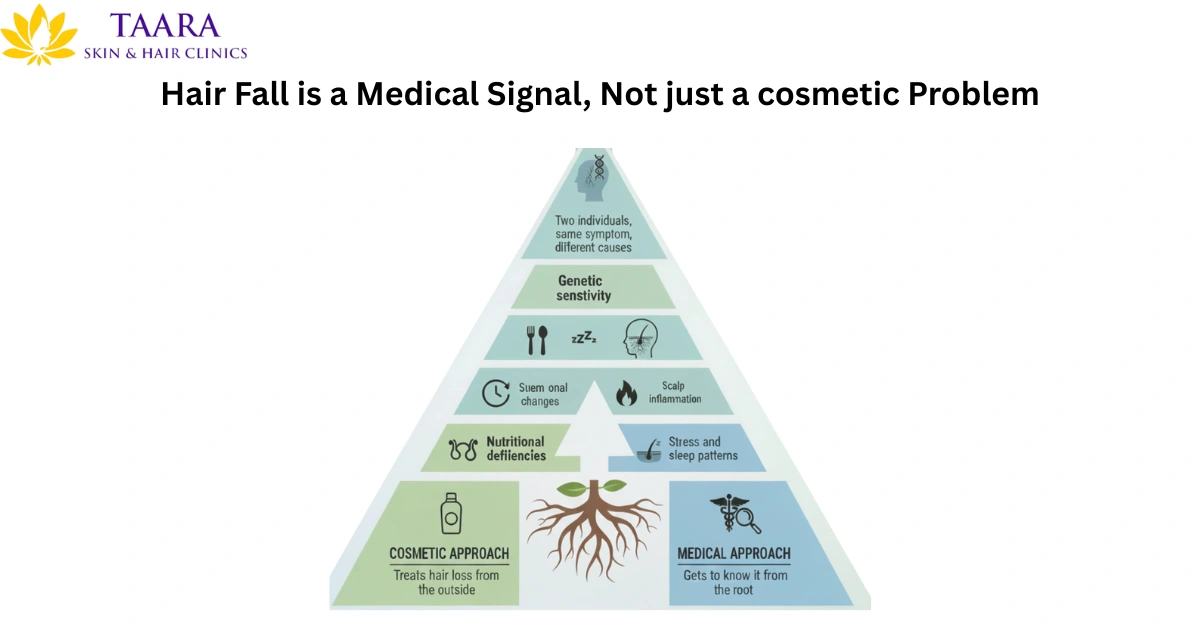
Hair fall is a medical signal, not just a cosmetic problem. Our hair is like a mirror of the changes taking place in our body.
Hair fall can be linked to:
- Hormonal changes
- Nutritional deficiencies
- Stress and sleep patterns
- Scalp inflammation
- Genetic sensitivity
This is the reason why two individuals having the same symptom may also have completely different causes. A cosmetic approach treats hair loss from the outside. A medical approach gets to know it from the root.
Self-Check: Are You at the Right Time to See a Hair Doctor?
You should strongly consider seeing a hair specialist if you answer “yes” to any of these:
- Hair volume has visibly reduced
- Hair fall has lasted more than 8-10 weeks
- Scalp is visible under normal light
- Hair feels thinner even after washing
- Family history of hair loss exists
- Scalp has itching, dandruff, or discomfort
These signs suggest the hair cycle is already affected. This is usually the point where people stop searching for products and start searching for a hair doctor near them.
What a Hair Doctor Looks For That You Can’t See
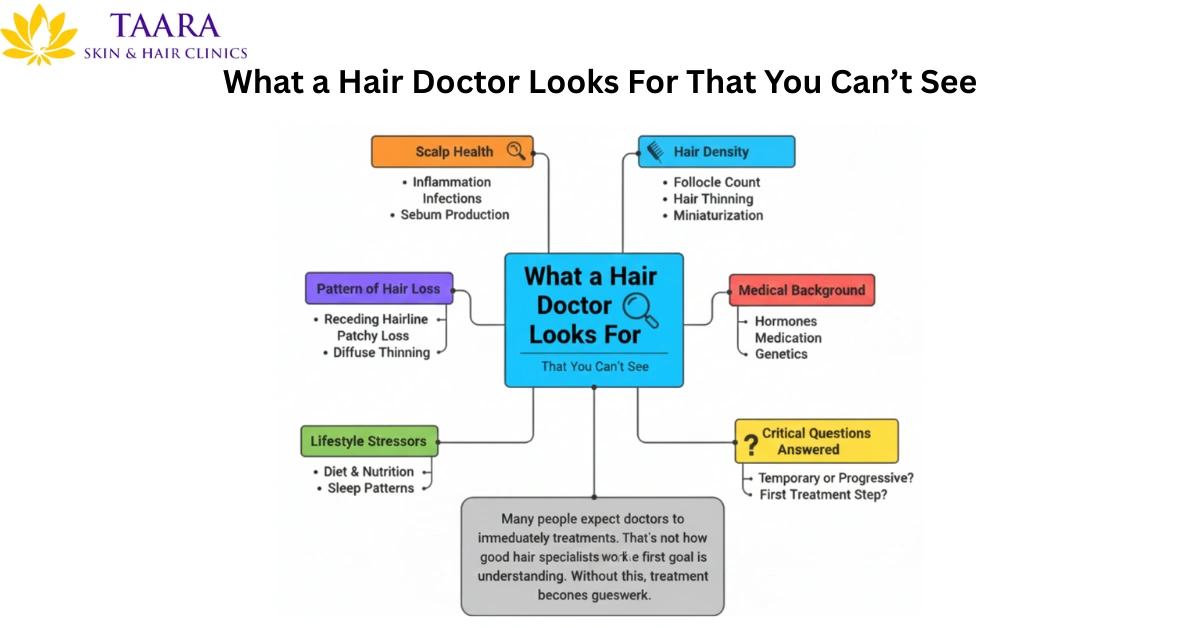
Many people expect doctors to immediately suggest treatments.That’s not how good hair specialists work. The first goal is understanding.
A hair doctor examines:
- Scalp health
- Hair density
- Pattern of hair loss
- Medical background
- Lifestyle stressors
This step alone answers critical questions:
- Is hair fall temporary or progressive?
- Is regrowth possible?
- What should be treated first?
Without this, treatment becomes guesswork.
Why Online Advice Often Creates More Confusion
Online content often mixes different hair problems together. One video talks about oiling. Another suggests supplements. A third recommends PRP. But hair loss is not universal. What helps stress-related hair fall may not help hormonal hair loss. What slows genetic hair loss may not fix scalp inflammation.
This overload of information often pushes people to try everything at once – which usually leads to disappointment. A hair doctor’s role is to filter noise and give direction.
Hair Treatment Is a Process, Not an Event
This is one of the biggest misunderstandings. Hair treatments do not work like painkillers. They work in phases.
The first phase usually focuses on:
- Reducing excessive hair fall
- Improving scalp health
The next phase focuses on:
- Strengthening existing hair
- Supporting regrowth where possible
Progress is gradual. This is normal and medically expected. Hair doctors guide patients through this timeline so expectations stay realistic.
Why PRP and Advanced Treatments Need Medical Guidance
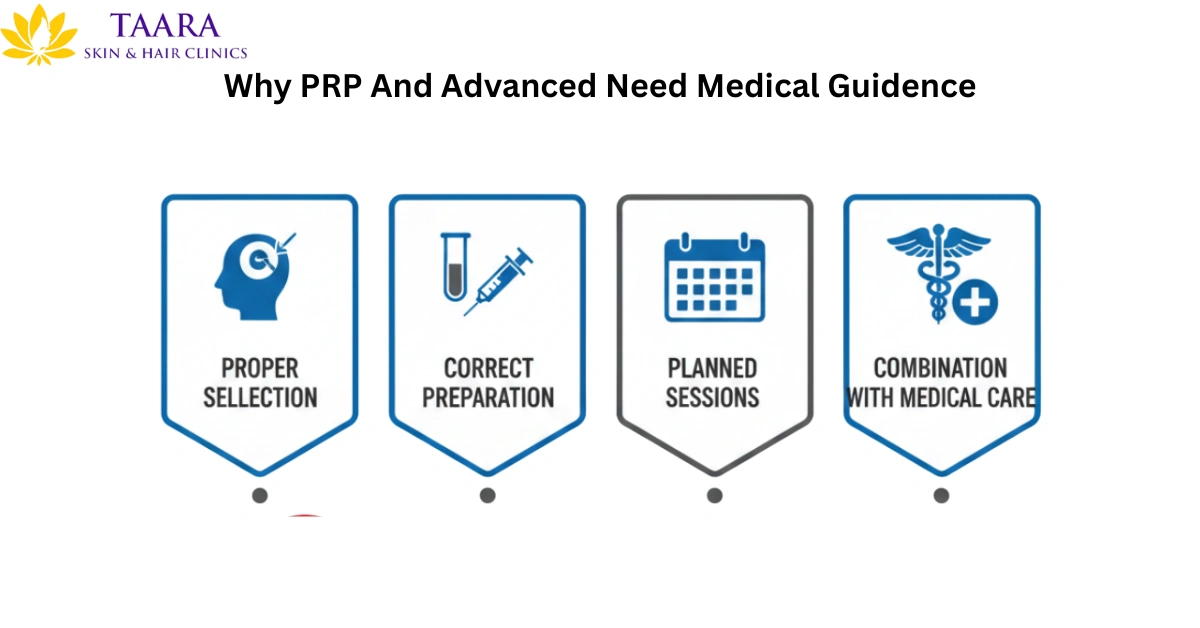
PRP hair treatment is widely discussed today. But it is not a cosmetic procedure.
It requires:
- Proper patient selection
- Correct preparation
- Planned sessions
- Combination with medical care
When done without medical judgment, PRP results can be disappointing. A hair specialist decides if, when, and how such treatments should be used – not just whether they are available.
Choosing a Hair Doctor Is More Important Than Choosing a Treatment
People often ask, “Which treatment is best?” The better question is, “Who is guiding the treatment?”
A good hair doctor:
- Explains clearly
- Sets honest expectations
- Avoids unnecessary procedures
- Focuses on long-term hair health
Doctors who promise instant regrowth are not practicing medical honesty.
What Patients Usually Say After Seeing the Right Hair Doctor
Patients who consult a hair specialist at the right time often say:
- “I finally understood my hair problem.”
- “I wish I had come earlier.”
- “The plan made sense.”
Clarity itself reduces anxiety.
The Right Time Is Earlier Than You Think
Hair loss is easier to slow than to reverse. Once follicles become inactive, options reduce. Searching “hair doctor near me” is often the first responsible step toward protecting hair – not a sign of panic. If hair fall has started worrying you, that itself is a sign to act.
Final Thought: Hair Care Needs Medical Thinking
Hair is a part of your overall health, not just something that affects how you look. Early signs of hair fall are often easy to ignore, but delaying care can allow the problem to progress and become harder to manage. Medical guidance does not mean rushing into strong treatments or procedures. It means understanding what is happening at the root level and choosing the right steps at the right time.
When hair care is guided by medical thinking, decisions are informed, realistic, and focused on long-term scalp and hair health rather than quick or temporary fixes. Get clarity, diagnosis, and a treatment plan based on your condition – not assumptions. No pressure. No shortcuts. Just honest, doctor-led hair care.
Consult an experienced hair doctor at Taara Clinics.