Excessive hair fall every day can be worrying and disturbing. Seeing your hair on your pillow every morning can feel like worrying and disturbing. When hair fall happens once in a while, it’s okay and feels normal. But when it happens every day, it becomes hard to digest. Many people don’t take any care, thinking it will stop on its own.
I have seen people wait for months before taking it seriously. Daily hair fall is often the body’s way of giving a warning. Understanding hair fall reasons early can help you take the right steps before the problem becomes worse. This blog will help you notice those signs and understand what your hair is trying to tell you.
How Much Hair Fall Is Considered Normal
Hair fall is a part of the natural hair cycle. Every strand has a life span. Losing some hair daily is normal, but too much hair loss is not.
Normal Hair Shedding vs Excessive Hair Fall
Hair doctors explain that not all hair fall means trouble.
- Losing 50 to 100 strands a day is common
- Hair fall during washing is normal
- Seasonal hair fall can happen
- New hair usually replaces lost hair
If hair fall is heavy and continuous, it may point to deeper hair fall reasons.
Daily Hair Fall as an Early Warning Sign
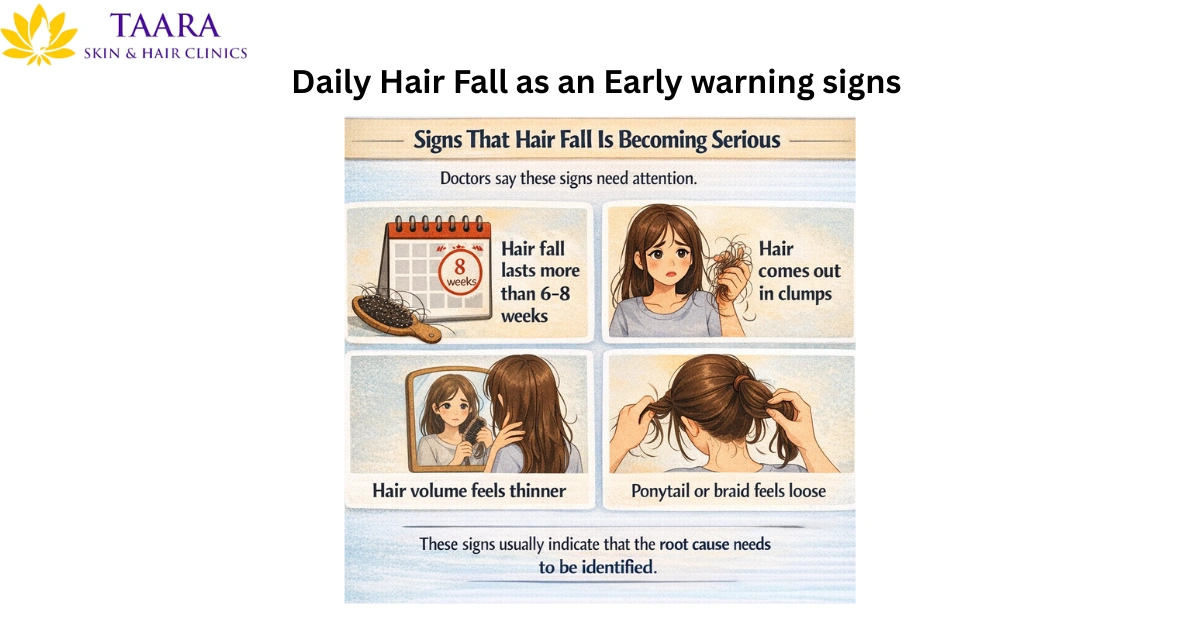
Excessive hair fall every day should not be ignored. It often starts slowly and increases over time.
Signs That Hair Fall Is Becoming Serious
Doctors say these signs need attention.
- Hair fall lasts more than 6-8 weeks
- Hair comes out in clumps
- Volume os your hair feels thinner
- Ponytail or braid feels loose
These signs usually indicate that the root cause needs to be identified.
Stress and Mental Pressure as Hair Fall Reasons
Stress is one of the most common hair fall reasons today everyone is facing. It affects both the mind and the body also.
How Stress Triggers Hair Loss
Hair doctors often explain stress-related hair fall like this:
- Stress pushes hair into resting phase
- Hair shedding increases suddenly
- Regrowth slows down
- Hair looks dull and weak
Long-term stress can make your hair fall continuously every day.
Poor Eating Habits and Missing Nutrients
Hair needs proper food at the right time to grow strong and long. When your body does not get the proper nutrients, hair becomes weak and starts to fall easily.
Nutrient Deficiency Linked to Hair Fall
Doctors often check for these hair fall reasons:
- Low iron levels
- Poor protein levels
- Less Vitamin D levels
- Less vitamin B12 levels
Even mild deficiency can cause the daily hair fall if you haven’t treated.
Changes in Hormones and Body Balance
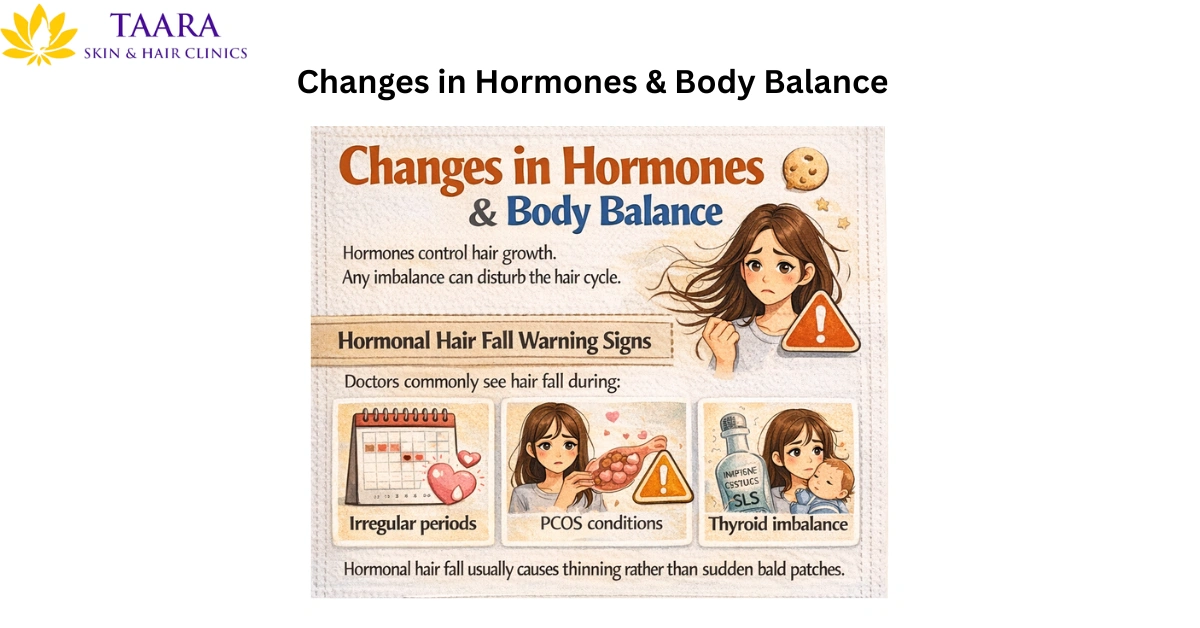
Hormones control hair growth. Any imbalance can disturb the hair cycle.
Hormonal Hair Fall Warning Signs
Doctors commonly see hair fall during:
- Irregular periods
- PCOS conditions
- Thyroid imbalance
- Post-pregnancy phase
Hormonal hair fall usually causes thinning rather than sudden bald patches.
Hair Care and Lifestyle Mistakes
Sometimes hair fall is not due to illness but daily habits. These mistakes slowly weaken hair roots.
Common Habits That Increase Hair Fall
Hair specialists often warn against:
- Tight hairstyles every day
- Excessive heat styling
- Harsh shampoos
- Skipping oiling completely
Correcting these habits can reduce hair fall over time.
Medical Conditions Linked to Excessive Hair Fall
Daily hair fall can also be a sign of an underlying medical issue. Treating hair alone may not help.
Health Problems Doctors Look For
Hair doctors may suggest tests for:
- Thyroid disorders
- Autoimmune conditions
- Chronic illness
- Sudden weight loss
Identifying these hair fall reasons early helps prevent further damage.
Hair Fall During Hair Wash and Comb Time
Many people panic when they see hair falling during hair wash. Wet hair is weaker and breaks easily. This makes hair fall look more than it actually is.
Why Hair Falls More During Washing
- Hair doctors explain this in a simple way.
- Loose hair falls out together during wash
- Wet hair stretches and breaks easily
- Rough towel drying causes breakage
- Strong shampoo rubbing increases shedding
- Gentle washing can reduce visible hair fall.
How Dandruff and Scalp Issues Cause Hair Fall
A healthy scalp is important for healthy hair and for roots also. When the scalp is unhealthy, hair roots become weak.
How Scalp Issues Increase Hair Fall
Doctors often see these scalp-related hair fall reasons:
- Dandruff blocking hair follicles
- Itchy scalp causing scratching
- Too much oil and dryness in your hair
- Fungal scalp infections
Treating scalp problems early helps control daily hair fall.
Sudden Weight Loss along with Hair Fall
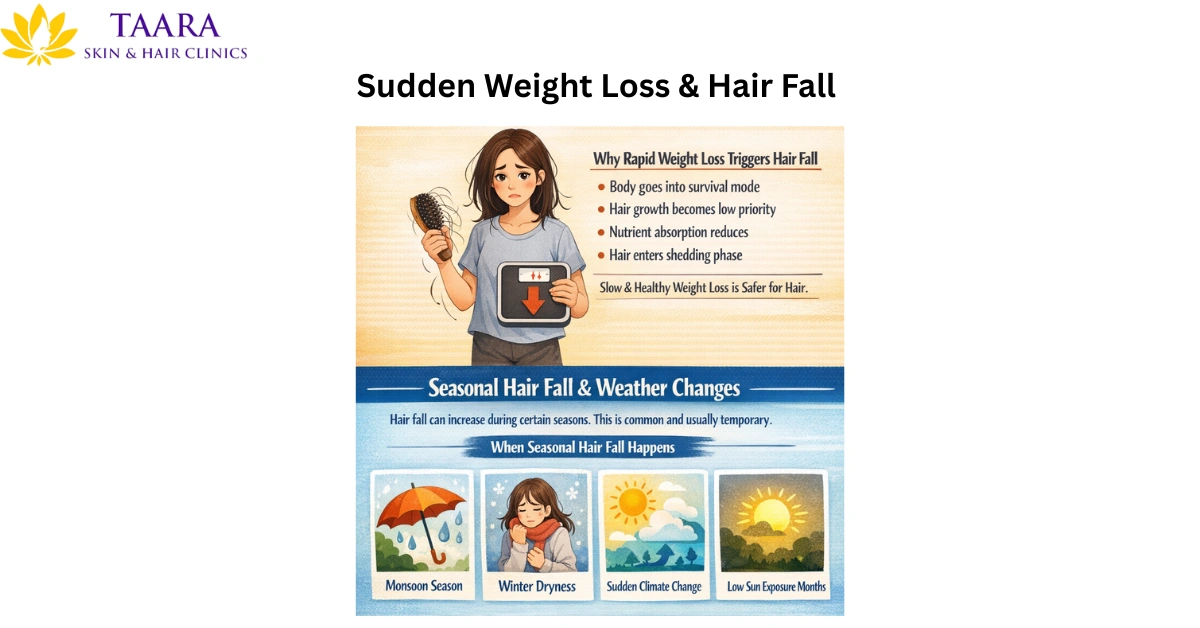
Many people do not connect weight loss with hair fall. But sudden changes in the body affect hair growth.
Why Rapid Weight Loss Triggers Hair Fall
Hair specialists explain that:
- Body goes into survival mode
- Hair growth becomes low priority
- Nutrient absorption reduces
- Hair enters shedding phase
Slow and healthy weight loss is safer for hair.
Seasonal Hair Fall and Weather Changes
Hair fall can increase during certain seasons. This is common and usually temporary.
When Seasonal Hair Fall Happens
Doctors often notice hair fall during:
- Monsoon season
- Winter dryness
- Sudden climate change
- Low sun exposure months
Seasonal hair fall usually settles with basic care.
Sleep Problems and Daily Hair Fall
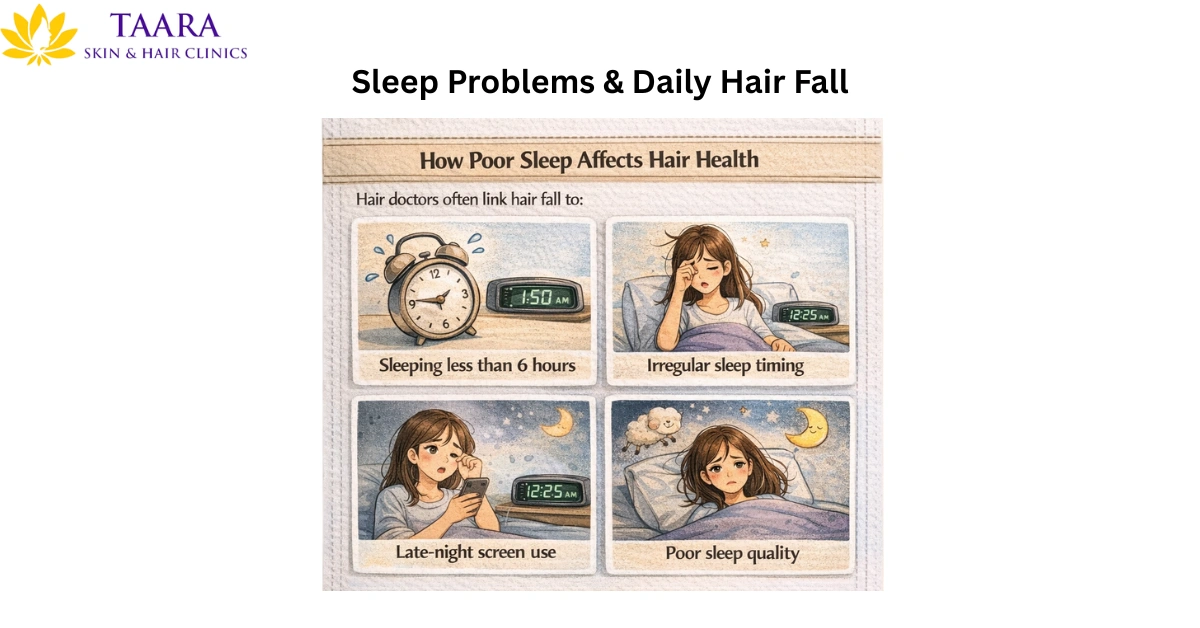
Sleep helps the body repair itself. Poor sleep affects hormones and stress levels.
How Poor Sleep Affects Hair Health
Hair doctors often link hair fall to:
- Sleeping less than 6 hours
- Irregular sleep timing
- Late-night screen use
- Poor sleep quality
Improving sleep can slowly reduce hair fall.
Overuse of Hair Products
Using too many products may look helpful, but it often harms hair in the long run.
Product-Related Hair Fall Reasons
Doctors commonly warn about:
- Product buildup on scalp
- Heavy serums blocking pores
- Frequent product switching
- Chemical-heavy styling products
Simple routines work better for long-term hair health.
When Home Remedies Are Not Enough
Home remedies help only mild hair fall. When hair fall continues daily, deeper care is needed.
Signs Home Care Is Not Working
Hair doctors suggest professional help if:
- Hair fall continues for months
- Scalp becomes visible
- Hair thinning increases
- No improvement with routine care
Early guidance prevents further hair loss.
How Doctors Identify the Real Hair Fall Reasons
Doctors do not guess the cause. They look at the whole picture.
What Hair Doctors Usually Check
Evaluation often includes:
- Medical history review
- Blood tests if needed
- Scalp examination
- Lifestyle and diet discussion
Correct diagnosis leads to better results.
Conclusion: Daily Hair Fall Is a Signal, Not a Problem to Ignore
Excessive hair fall every day is the body’s way of asking for attention. It rarely happens without a reason. Understanding the hair fall reasons early helps you to prevent long-term damage. Small changes in your lifestyle along with the diet, and hair care can make a big difference. When needed, professional guidance helps identify the real cause. Hair recovery takes time, but early action always gives better results. Listen to your hair, respect the warning signs, and take care before the problem grows bigger.
“If you are experiencing excessive hair fall every day, consult a hair specialist to identify the real cause and start the right treatment early.”