Acne was for most people a thing to end with teenage years. School was over, hormones were supposed to calm down, and breakouts were expected to disappear by themselves. However, a number of adults today are such that their acne has not followed this timeline. Acne pimples may pop up for the very first time even in the late twenties, thirties, or forties and in some cases, the individuals may be encountered with childhood acne that has never fully faded. Adult acne may be puzzling and unfair to the core of your heart.
You could be eating well, keeping good hygiene, and following your skincare routines and yet acne would still show up unannounced. Some people notice painful, deep breakouts around the jawline or chin. Some people get their acne flares, ups when they are stressed, do not sleep well, or suffer from hormonal changes.
A lot of adults are sadly in this situation where they have to deal with acne that takes a long time to heal and leaves dark marks or scars, as a result, the problem feels more stubborn and difficult to handle. Adult acne is just so annoying to be one of the reasons why it is so difficult to find any definite answers. Most of the time, online advice is very contradictory. The products you used to be helped by, stop working.
This blog is made to help people understand those questions better about adult acne after 25. It gives reasons for the skyrocketing cases of acne after 25, explains how adult acne differs from teenage acne, and points to the fact that a different, more balanced approach is necessary for the treatment.
Besides that, it shows what dermatologists really advise for the control of acne that is safe, achievable, and long, lasting without myths, panic, or unnecessary aggression towards the skin. Knowing adult acne is actually the first step through which one can handle it with assurance.
Why Adult Acne Feels More Disturbing Than Teenage Acne
Acne during the teenage years is typically seen as a natural part of maturing. Acne in adults, on the other hand, has a different impact on the person’s confidence. It is an interference with work, social life, and the way one sees oneself.
Adults often feel:
- Uneasy to talk about their acne
- Irritated when their acne keeps coming back
- worried about the development of acne scars
- being confused by the different kinds of advice given to them.
One of the reasons adult acnes is so stressful is because of its unpredictable nature. Sometimes it can be very positive for a few weeks only to become bad again quite suddenly even when there are no clear triggers.
Adult Acne Is Not the Same as Teenage Acne
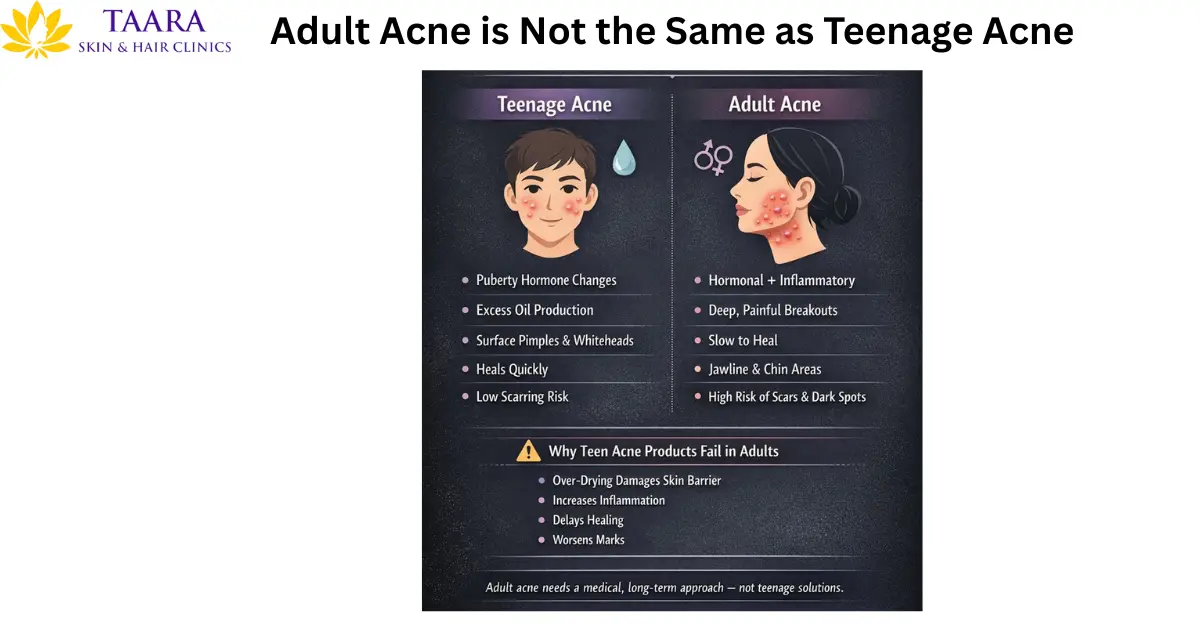 One of the massive errors that individuals make is the treatment of adult acne as if it were teenage acne.
Very often teenage acne is caused by:
- Hormonal changes related to puberty
- skin due to overproduction of sebum
- Breakouts that occur only on the surface of the skin
While adult acne is very often:
- Hormonal and changes
- Deeper and painful
- Slower to heal
- More likely to leave marks
That is the reason why the majority of products designed for teenage acne fail when used by adults and sometimes worsen the acne.
Common Patterns of Adult Acne
Dermatologists see clear patterns in adult acne:
-
Jawline and Chin Acne
Often linked to hormonal change and stress.
-
Lower Face Acne
More common in women and tends to flare cyclically.
-
Persistent Small Pimples
Often related to barrier damage or wrong skincare.
-
Painful, Deep Acne
Usually inflammatory and needs medical care.
Understanding the pattern helps decide the right adult acne treatment.
Why Acne Appears After 25
Adult acne is not a scenario with only one cause. It develops from a mixture of internal and external factors that have been interacting over time. After 25 years of age, hormonal changes, increased stress, lifestyle changes, sleep disruption, and diet, all these factors influence the skin.
However, pollution, climate, and water quality are factors in the atmosphere that, along with the skin’s protective barrier, do harm and make the skin more susceptible to redness and acne.
In general, adult acne, which is different from teenage acne, is an inflammatory condition probably due to a deeper inflammation and slow healing process. Moreover, with age, skin is getting more sensitive, so if you apply harsh products or have a harsh routine, the condition can become worse.
In such cases, acne can appear abruptly or can be of a longer duration than you would expect, therefore, even those who have never had acne before may get it.
Hormonal Changes Beyond the Teen Years
After puberty, hormones do not settle down once and for all.
In grown, ups, acne may be caused by:
- Fluctuations in the menstrual cycle
- PCOS
- Thyroid imbalance
- Pregnancy or postpartum changes
- Perimenopause
On top of that, hormonal acne is usually
Stress and Cortisol Levels
Stress, as one of the significant contributors to acne in adults, is a factor that impinges heavily on the development of the disease.
In fact, stress is the reason for the rise of cortisol, a hormone that:
- Stimulates oil glands
- Increases inflammation
- Slows skin healing
This is why acne flares up during:
- Work pressure
- Poor Sleep patterns
- Emotional stress
Cortisol allows oil glands to secrete more oil to the skin making it greasier and oilier. Makes the problem of inflammation more severe. Slows down the skin renewal process. This is why acne become more aggressive when a person is experiencing:
Lifestyle Shifts After 25
Adult routines are very different from teenage years.
Common lifestyle changes include:
- Irregular meals
- Reduced physical activity
- Late nights
- High screen exposure
These habits influence hormones, digestion, and skin repair. Treatment for acne in adults may also comprise changes in the patient’s way of life that go hand in hand with the medical care given.
Diet and Adult Acne
Food is not a direct cause of acne, however, it has the potential to aggravate already existing acne.
Typical triggers are:
- High sugar intake
- Excess dairy in some individuals
- Processed foods
- Poor hydration
Dermatologists do not impose strict diets but help identify personal triggers.
Skin Barrier Damage: A Hidden Cause
Many adults unknowingly damage their skin barrier.
This happens due to:
- Over-cleansing
- Excess exfoliation
- Using multiple active products
- Trying online trends
A damaged barrier leads to:
- Sensitivity
- Inflammation
- Recurrent acne
Adult acne treatment often starts with barrier repair, not aggressive acne control.
Why Adult Acne Keeps Coming Back
Repeated adult acne is most of the time a sign of:
- Root cause untreated
- Treatment stopped too early
- Maintenance care skipped
- Triggers ignored
Acne control requires a phased approach, not a one-time solution.
What Does NOT Work for Adult Acne
-
Strong Scrubs and Frequent Face Washing
These increase irritation and oil production.
-
Random Product Switching
The skin requires consistency rather than frequent changes.
-
Home Remedies for Persistent Acne
They may soothe temporarily but rarely control adult acne.
-
Ignoring Acne Marks
Marks indicate ongoing inflammation and need medical care.
What Dermatologists Recommend for Adult Acne Treatment
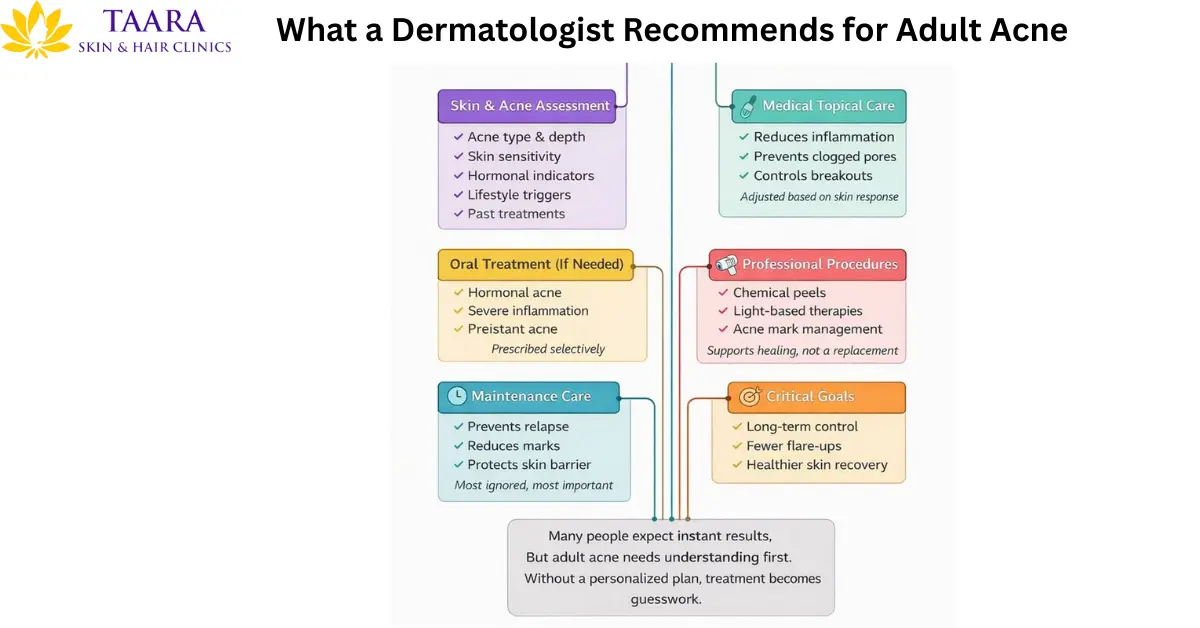
1. Detailed Skin and Acne Assessment
Doctors evaluate:
- Acne type
- Skin sensitivity
- Hormonal signs
- Lifestyle triggers
- Previous treatments
This prevents unnecessary or harmful treatments.
2. Medical Topical Treatments
Used carefully to:
- Inflammation Reduction
- Prevent clogged pores
- Control breakouts
These are adjusted based on skin response.
3. Oral Treatments (When required)
Used selectively for:
- Hormonal acne
- Impediment of pores being blocked
- Resistant acne
Always monitored for safety.
4. Professional Procedures
Such as:
- Skin resurfacing peels
- Light-based treatments
- Acne mark management
These support healing, not replace medical care.
5. Maintenance Care
The most ignored but crucial step.
Maintenance prevents:
- Relapse
- Marks
- Long-term sensitivity
Adult Acne and Emotional Impact
Adult acne is not only a problem that affects the skin of a person; it is a condition that imposes changes in the emotional side of a person too.
People often experience:
- Low self-belief
- Social unease
- Anxiety about appearance
Dermatologist-led care addresses both physical and emotional concerns.
How Long Does Grownup Acne Treatment Take?
Adult Pimples improve gradually.
Doctors explain:
- Initial flare-ups may occur
- Improvement takes weeks
- Consistency matters more than speed
Good results will be visible only after several weeks
When to See a Dermatologist for Adult Acne
Visit a doctor if:
- Acne lasts more than 2-3 months
- Breakouts are painful or deep
- Marks are forming
- Acne affects confidence
- Home care fails
Early care prevents scarring.
Final Understanding: Adult Acne Needs Balance, Not Force
Generally, an aggressive type of therapy does more harm than good. The skin of an adult body is quite different from that of a teenage one. It is a more sensitive skin, heals slower, and is more susceptible to irritation and scars. When acne is forcibly treated, the skin barrier becomes weakened, inflammation escalates, and consequently, the skin is likely to suffer from breakouts, which will return again and again.
Proper adult acne treatment:
- Calms inflammation
- Repairs the barrier
- Controls triggers
- Prevents recurrence
It is just as necessary to fix the skin barrier. A good number of adults, probably without even realizing it, break their skin barrier by cleansing too much, exfoliating and frequently changing products.
The last and most forgotten of the steps is to stop the return of the disease. Adult acne treatment is a journey that ends when pimples disappear. Maintenance treatment stabilizes the skin, decreases the occurrence of acne, and keeps the skin safe from blemishes and scars. It is this long, term approach that makes the results sustainable.
The last and most forgotten step is stopping the return of the disease. Adult acne treatment is a journey that ends when pimples disappear. Maintenance treatment stabilizes the skin, reduces the frequency of acne, and protects against blemishes and scars. It is this long, term approach that makes the results sustainable. Medical supervision is what stabilizes the situation as it is based on balance, consistency, and understanding rather than urgency or force. When adult acne is treated with patience and proper medical assistance, the skin becomes calmer, stronger, and more manageable with time. Take the Right Step for Adult Acne Treatment.