Confidence often comes from how skin looks. Still, plenty face issues like pimple marks, uneven tones, fine lines, or lackluster texture. That shift toward stronger skincare options has quietly gained ground. Some people try chemical peels, others go for laser therapy. But when comparing chemical peel vs laser treatment, which one is better for your skin?
For some people, the result won’t be identical. Treatment paths diverge because they operate on distinct mechanisms. Benefits vary alongside associated dangers, expenses, healing periods, and recovery lengths. Start by knowing your options, each has its own path and fits certain lives better than others.
Here, each part unfolds without confusion, helping you weigh options clearly while staying protected.
What Is a Chemical Peel
Peeling away old skin happens when a certain liquid touches the surface. Once that outer layer lifts free, newer skin shows up beneath, clear and less rough.
Skin gets a light scrub through gentle acid picks chosen by doctors. Peel power shifts based on what’s wrong with the skin at the time.
Types of Chemical Peels
There are three big categories.
1. Superficial Peel
A gentle peel takes place here. Only the outer skin layer gets removed. Dealing with slight dark spots becomes easier. Dull texture improves too. Tiny pimples respond well also. Healing happens fast almost instantly.
2. Medium Peel
Faster than most, this peel digs further into the skin. Acne marks, uneven shadows, even tiny wrinkles get attention here. A few days following the session, peeling could happen. Skin shifts while it heals.
3. Deep Peel
A good peel shows up here. Deeper lines and scars feel its effect. Healing takes extra days, yet changes stand out sharply.
What Problems Can a Chemical Peel Treat
- Acne
- Acne marks
- Pigmentation
- Uneven skin tone
- Fine lines
- Sun exposure
- Dull skin
A quick treatment makes chemical peels appealing to most. Simplicity plays a role, along with low cost. Ease stands out for those looking for change without effort.
What Is Laser Treatment
Light focused by a laser works on the skin’s surface. It removes old tissue while warming sections below, stirring new tissue growth. This substance, called collagen, helps skin stay tight and fresh. Growth here builds strength over time.
When talking about chemical peels compared to laser treatments, lasers often bring deeper strength and sophistication. What sets them apart is how intensely they work on skin issues. These machines pack a serious punch compared to older methods like peels. Their power stands out across many cosmetic setups.
Types of Laser Treatments
1. Ablative Laser
A beam from this laser strips away skin’s outside layer. Useful when tackling strong lines and pitted marks.
2. Non-Ablative Laser treatment
This laser ignores the outer layer entirely. What happens instead is warmth reaching deeper into the skin. Skin begins to firm up while its appearance grows smoother.
3. Fractional Laser treatment
This method focuses on tiny parts of the skin, while keeping everything nearby neutral. Faster recovery often follows.
What Problems Can Laser Treatment Treat
- Deep acne scars
- Wrinkles
- Loose skin
- Stretch marks
- Heavy skin coloring
- Sun damage
A single laser session can sometimes last much longer than expected. Power levels differ widely depending on the area treated. Most people notice visible improvements quite early after their appointment.
Chemical Peel vs Laser Treatment: Key Differences
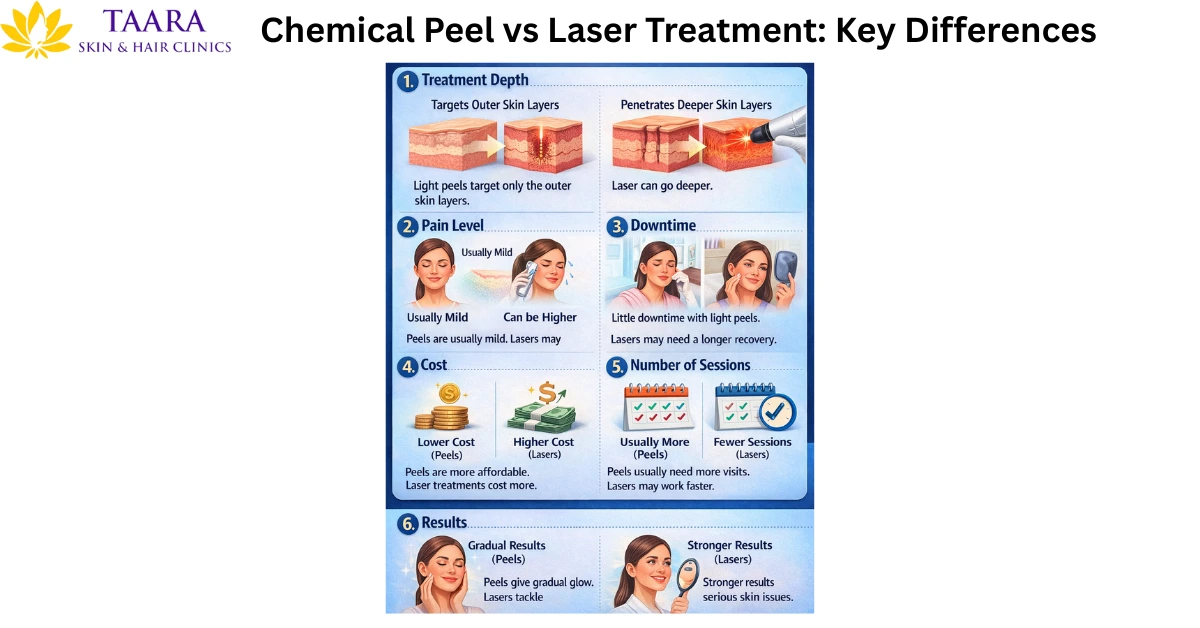 Here’s how it breaks down when you look at chemical peels alongside laser treatments using everyday language.
1. Treatment Depth
Chemical peels target only the outer skin layers all except deep ones. A beam of light may travel further into the skin than some expect.
A light treatment could handle slight issues. Deeper marks might respond more effectively with a laser approach instead.
2. Pain Level
What level of pain are you currently feeling? A light chemical peel might tickle the skin a bit.
Some people find laser sessions harder to tolerate, yet medics often apply numbing gel to lower discomfort.
3. Downtime
Most people can go about their day right after getting a superficial peel. No long recovery needed here. Healing after medium or deep peels can take several days.
Healing from laser sessions, particularly ablative ones, often takes around seven days or longer.
4. Cost
Most chemical peels come at a lower cost.
Even though its high end, laser therapy expenses exist due to modern tech demands.
5. Number of Sessions sessions number
Most peels need more than one visit to work fully. Results usually build slowly over time.
Some laser treatments may show big improvement in fewer sessions.
6. Results
Skin brightness and smoothness grow slowly from peels.
For serious issues, laser solutions may deliver greater impact and lasting effects.
Benefits of Chemical Peels
Chemical peels offer many benefits, especially for beginners.
1. Quick Procedure
A typical peel lasts between twenty and thirty minutes.
2. Affordable Option
These options usually cost less than laser procedures.
3. Improves Skin Glow
A peel strips away flat, lifeless layers. What shows up after? Skin that looks lighter, clearer, suddenly awake.
4. Helps with acne and skin pigmentation
For everyday use, these do a good job on light acne plus freckles or age marks.
5. Minimal Downtime (Light Peels)
Life goes back to normal following a basic peel treatment.
For people who want gentle improvement, peels are a great start.
Benefits of Laser Treatments
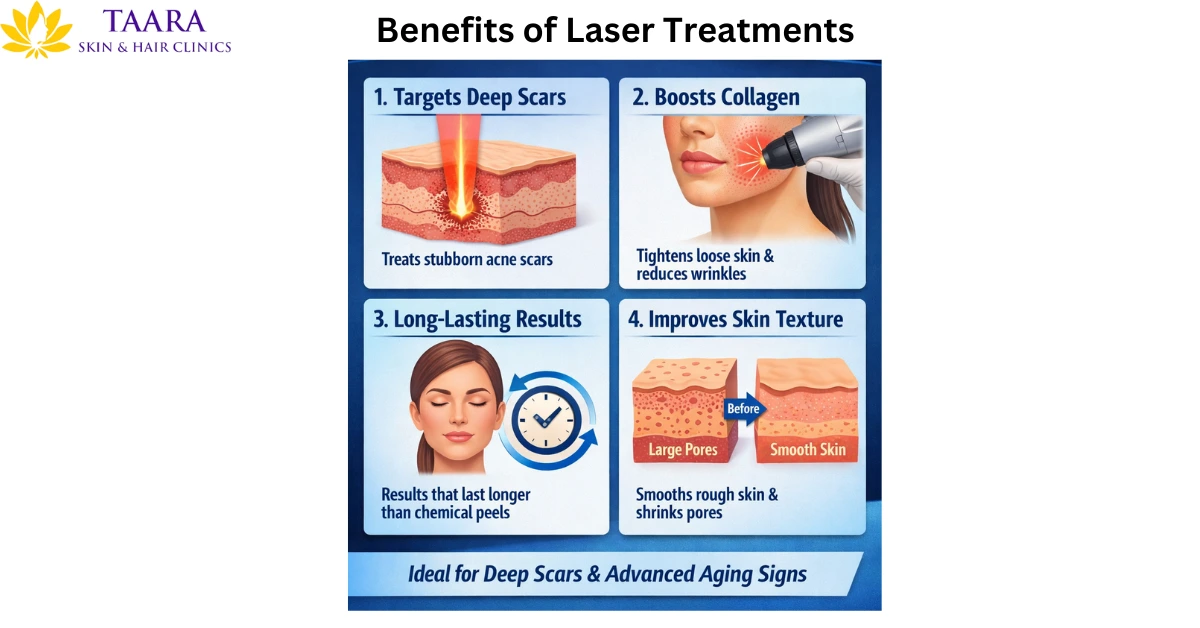 Nowadays, lasers have become far more powerful and refined.
1. Targets deep scars
A beam of light may go further into the skin, helping clear tough acne marks.
2. Boosts Collagen
It helps tighten loose skin while lowering wrinkle depth.
3. Long-Lasting Results
Most laser outcomes stay active more time than chemical peels.
4. Improves Skin Texture
It softens uneven skin while shrinking wide pore openings.
For serious scars or noticeable skin changes, laser options often work better.
Side effects and risks
Each approach carries risks in some way, so guidance from a skilled professional help keep things under control.
Chemical Peel Side Effects
- Redness
- A slight puffiness
- Peeling
- Sensitivity during temporary work periods
Laser Treatment Side Effects
- Redness
- Swelling
- Burning sensation
Dark spots might appear more easily in people with deeper skin tones
A skin expert with years of work behind them can lower those dangers. Doing such procedures yourself? That should never happen.
Who Should Choose a Chemical Peel
A chemical peel may be right for you if:
- You have mild acne
- Your skin carries low pigment levels
- Skin appears lackluster here
- You want an affordable option
- You are new to skin treatments
A peel can help keep skin looking bright and even. Glow stays longer when it’s part of the routine.
Who Should Choose Laser Treatment
Lasers work well when:
- You have deep acne scars
- You have deep wrinkles
- You have severe pigmentation
- You want skin tightening
- You want stronger results
Looking at chemical peels against laser treatments, the laser tends to work well when dealing with deep skin issues.
What works best for skin in India
Melanin levels run higher in South Asian skin. That boost can lead to darker scars after inflammation. Choosing a therapy takes care because of it.
Most people on the subcontinent tolerate light chemical peels well, especially if a trained professional applies them. Some laser sessions work well, provided the choice fits the person. Not everyone fits all.
Check in with a dermatologist familiar with how Indian skin reacts before trying anything new.
Recovery and Aftercare
Following either session, proper care matters just as much.
After Chemical Peel
- Stay away from sunlight.
- Use sunscreen daily
- Stay away from rough cleaners.
- Stay hydrated inside the skin layer. Keep it moist.
After Laser Treatment
- Stay out of straight sunlight
- Healing creams get applied
- Do not scratch peeling skin
- Follow doctor instructions strictly
Aftercare matters because it supports healing and safer outcomes.
Why Dermatologist Consultation Is Important
Online ads fill screens every day. Still, picking skin treatments? That usually needs guidance from someone who knows.
- A skin expert handle
- Check your skin type
- Grasp what’s worrying you
- Suggest the safest option
- Explain risks and benefits
- Create a custom treatment plan
Figuring this out matters a lot if you’re thinking about chemical peels or laser options.
Common Myths
Myth 1: Laser Is Always Better
The laser is more intense, yet often surplus.
Myth 2: Chemical Peels Thin the Skin
Peels take off old skin cells while boosting how fast new ones grow.
Myth 3: One Session Is Enough
Most treatments need multiple sessions for their full effect.
Knowing what’s real can lead to choices that feel right.
Final Thought
Pick one chemical peel or laser based on what’s wrong with your skin, how easy you feel trying it, and also how much money you’re ready to spend. A brighter look can come from just a simple peel if small changes are what you seek. Deeper lines or marks might respond more strongly to light energy from a laser instead.
Both treatments are safe when done by trained dermatologists. However, the wrong choice can cause problems. So, never self-diagnose.
Lasting clear skin takes time, not shortcuts. Start by seeing a trained dermatologist who understands your needs. Talk through what you want with someone skilled in skin health. Pick the approach that fits your face and routine without rushing things.
Since what helps most is the approach that suits you without harm or side effects.