Difference Between Thinning and Hair Loss
Many people believe that thinning and falling are the same issues to health.
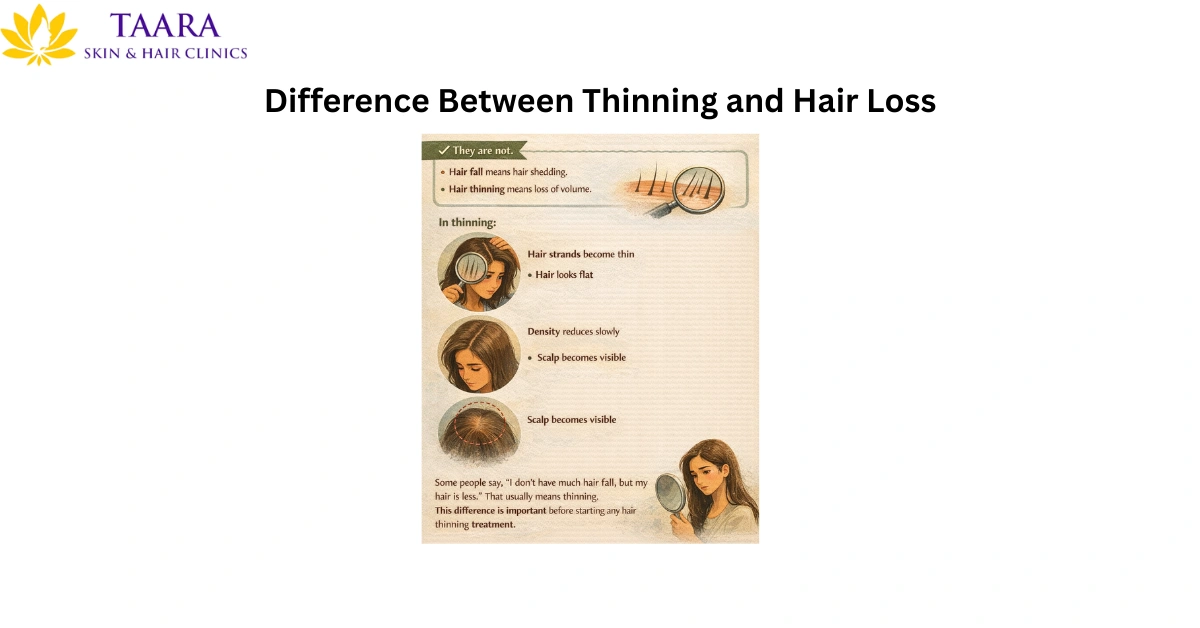
- They are not.
- Hair fall means hair shedding.
- Hair thinning means loss of volume.
In thinning:
- Hair strands become thin
- Hair looks flat
- Density reduces slowly
- Scalp becomes visible
Some people say, “I don’t have much hair fall, but my hair is less.” That usually means thinning. This difference is important before starting any hair thinning treatment.
Why Hair Thinning Does Not Feel Serious at First
Hair thinning does not cause pain and there is no itching in many cases and no redness or burning. Because of this, people do not feel worried in the beginning. Another reason is slow change. People compare their hair with last month, not last year. Monthly change feels small and yearly change shows the real loss. By the time people feel concerned, thinning has already progressed.
How Hair Growth Normally Works
Hair does not grow every day.
It follows a cycle:
- Growth phase
- Rest phase
- Shedding phase
At any time, some hair falls and some hair grows. This balance keeps hair full. When growth becomes weak and shedding continues, hair starts thinning. Hair thinning treatment tries to correct this balance.
Why People Cannot Identify the Real Problem
Hair thinning rarely has one single cause.
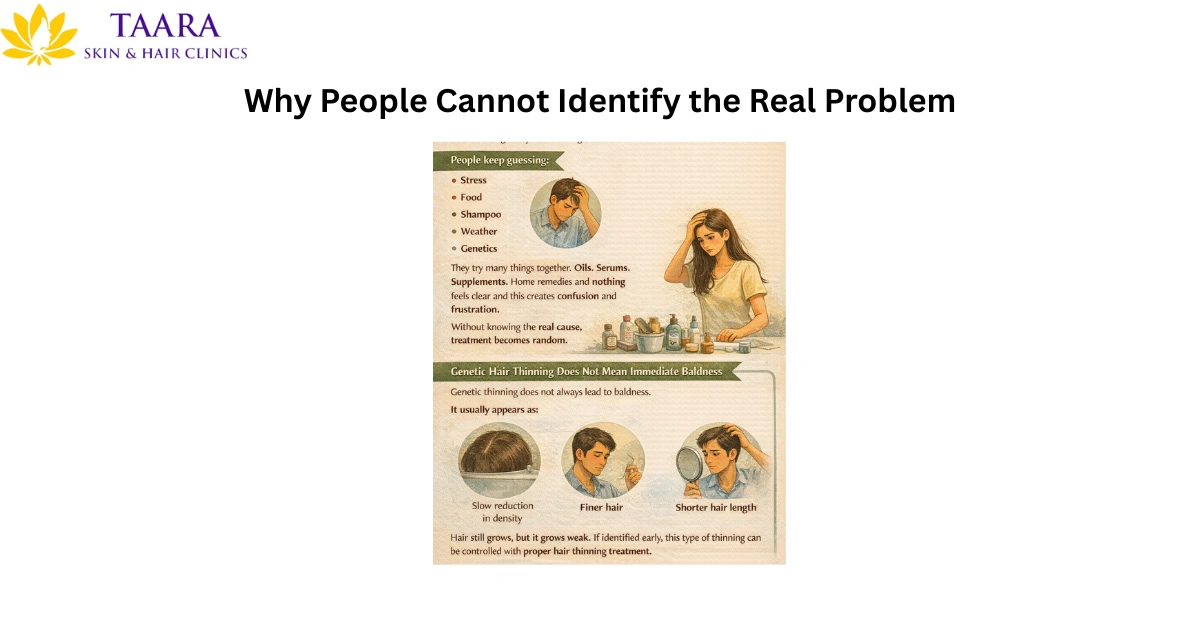
People keep guessing:
- Stress
- Food
- Shampoo
- Weather
- Genetics
They try many things together. Oils. Serums. Supplements. Home remedies and nothing feels clear and this creates confusion and frustration. Without knowing the real cause, treatment becomes random.
Genetic Hair Thinning Does Not Mean Immediate Baldness
Genetic thinning does not always lead to baldness.
It usually appears as:
- Slow reduction in density
- Finer hair
- Shorter hair length
Hair still grows, but it grows weak. If identified early, this type of thinning can be controlled with proper hair thinning treatment.
Stress Affects Hair More Than People Realise
Stress does not cause instant hair loss.
- It works slowly.
- During long stress:
- Hair enters rest phase early
- Growth slows
- Hair sheds later
Many people notice thinning months after stress, not during it. This delay makes it confusing. Once stress reduces, hair can recover with proper support.
Diet and Hair Strength Are Connected
Many people eat daily and still have hair thinning. The problem is not always quantity but quality and absorption.
Common issues include:
- Low protein
- Iron imbalance
- Vitamin deficiencies
Hair follicles need nutrition regularly. When supply reduces slowly, hair becomes weak slowly and doctors usually check this before suggesting supplements.
The Health of the Scalp Is Frequently Overlooked
The hair grows from the scalp and not from oils or shampoo.
If the scalp is:
- Inflamed
- Too oily
- Too dry
Hair roots become weak and many people only care about hair strands and if they ignore scalp issues until they become severe. Scalp correction is a basic step in hair thinning treatment.
Why Online Advice Creates More Confusion
Online tips mix all hair problems together. Advice for dandruff is used for thinning.Growth serums are used on irritated scalp.
- Heavy oils are used on oily scalp.
- Some people see short relief.
- Then the problem returns.
Without proper evaluation, advice does more harm than good.
What Doctors Check During Hair Evaluation
Doctors do not only count fallen hair.
They check:
- Hair thickness
- Density
- Scalp condition
- Pattern of thinning
- Family history
This helps them understand whether the issue is thinning, shedding, or both. Treatment depends on this understanding.
Why One Treatment Does Not Work for Everyone
Hair thinning looks similar to many people.
- But the cause can be different.
- One person may need scalp care.
- Another may need nutrition support.
- Another may need growth support.
This is why copying someone else’s routine rarely works.
What Hair Thinning Treatment Really Focuses On
Hair thinning treatment does not promise fast volume.
It focuses on:
- Reducing ongoing thinning
- Strengthening existing hair
- Supporting healthy regrowth
The first improvement is usually better hair strength, not instant thickness.
Why Early Action Matters
Hair roots respond better in early stages.
Early treatment:
- Preserves existing hair
- Gives better results
- Reduces future damage
- Waiting makes recovery slower.
Why Results Take Time
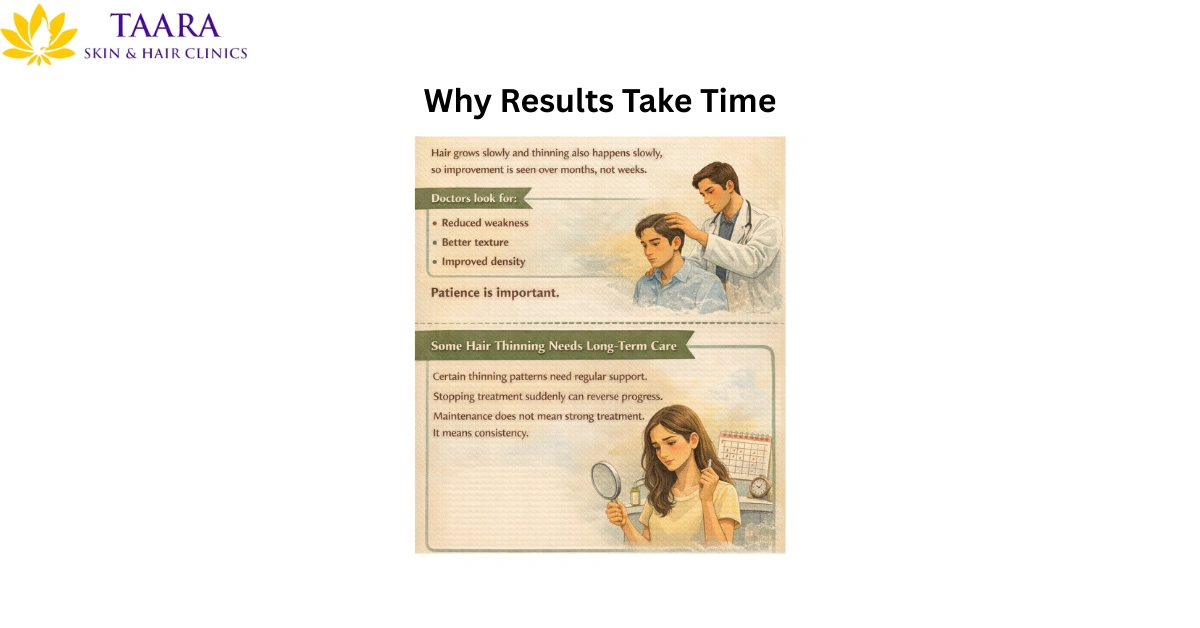
Hair grows slowly and thinning also happens slowly and you can see improvement is seen over months, not weeks.
Doctors look for:
- Reduced weakness
- Better texture
- Improved density
- Patience is important.
Some Hair Thinning Needs Long-Term Care
- Certain thinning patterns need regular support.
- Stopping treatment suddenly can reverse progress.
- Maintenance does not mean strong treatment.
- It means consistency.
Hair Thinning Affects Confidence
Many people do not talk about this.
- They avoid photos.
- They change hairstyles.
- They feel older than their age.
Understanding this emotional side helps people stay committed to treatment.
Knowing Your Real Problem Makes Treatment Easier
Once people understand their hair problem:
- They stop guessing
- Stop changing products
- They follow a clear plan
Hair thinning treatment works best with clarity, not panic.
When Should You Start Hair Thinning Treatment?
Many people wait too long before starting hair thinning treatment. They think hair fall will stop on its own. But thinning usually gets worse if you ignore it.
You should think about treatment if you notice:
- Hair looking flat or less volume
- More scalp visible under light
- Hair fall continuing for many months
- Hairline or parting slowly getting wider
Begin early to keep your existing hair healthy. You may find that you can get great results with medicinal treatments, scalp treatments, and lifestyle changes before baldness has become a severe problem.
Waiting too long could limit future choices for treating hair loss. By managing hair loss as soon as possible, results will be improved; action should not be delayed until a serious degree of hair loss has occurred.
Final Thoughts on Hair Thinning Treatment
Hair thinning is a slow process, and it develops over time due to many factors like stress, poor nutrition, hormonal imbalance, lack of sleep, or improper hair care. It does not happen in a single day. Because it is gradual, many people fail to notice it until the thinning becomes clearly visible.
Trying to understand and correct the real causes of hair loss is the first important step toward recovery. If the root problem is ignored, treatments may not give proper results. Once the condition is diagnosed correctly, simple daily care routines, a balanced diet, and regular follow-up can slowly improve hair strength. Recovery takes time, and patience plays a big role in this journey.
Hair needs calm and consistent care. Harsh treatments, frequent product changes, or stress about hair fall can make the situation worse. When hair is treated gently and regularly, the roots get time to regain strength. Over weeks and months, this steady approach can help reduce hair fall and support healthy regrowth.
The key is consistency, not quick results. With the right guidance and a peaceful mindset, hair has a better chance to return to its natural thickness and health.