Most people notice changes in their hair slowly. One day the hair feels lighter. Another day the mirror shows more scalp than before. This creates confusion. Many people think that hair thinning and hair loss are the same, but they are different. Understanding the difference is important to choose the right hair thinning treatment.
Hair thinning is slow and quiet and hair loss is more sudden and visible. I have seen people panic when they only had mild thinning. I have also seen people ignore heavy hair loss, thinking it is normal. Knowing the difference saves a lot of stress.
Why Many People Get Confused Between Hair Thinning and Hair Loss
These situations often confuse people. Hair looks flat after washing. The ponytail feels thinner than before. More hair seen on the pillow. The scalp looks visible under bright light. Just understanding what these signs really mean helps you choose the right hair thinning treatment.
How Hair Thinning Feels in Daily Life
Hair thinning does not shout. It whispers. People feel something is wrong, but they do not know the exact reason and they cannot explain the problem properly.
Daily Problems of Hair Thinning
People with thinning hair often notice:
- Hair does not hold volume
- Styles do not look full
- Hair feels soft and weak
- Hair breaks easily
Hair thinning happens for months and years, not just overnight.
How Hair Loss Feels Different From Thinning
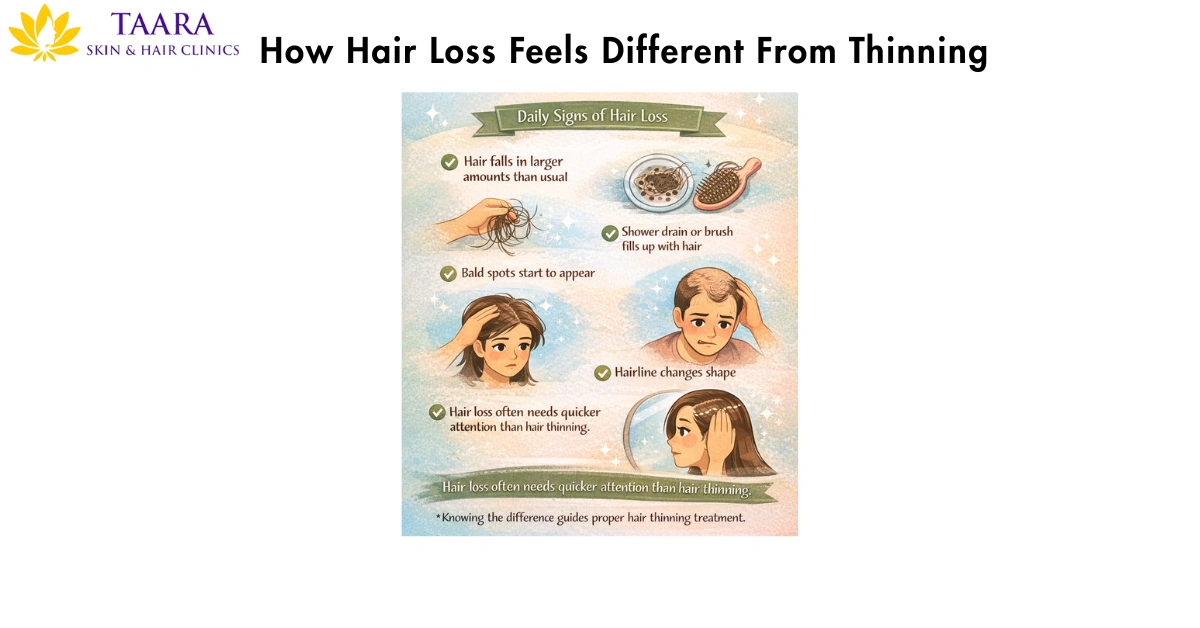
Hair loss feels more alarming. It becomes hard to ignore because the changes are faster and clearer.
Daily Signs of Hair Loss
People facing hair loss often say:
- Hair falls in large amounts
- Shower drain fills with hair
- Bald spots start to show
- Hairline changes shape
Hair loss often needs quicker attention than hair thinning.
Emotional Impact of Hair Changes
Hair problems do not affect only the head. They affect confidence too. Many people feel worried, but they do not talk about it.
How Hair Issues Change Your Feelings
Common emotional reactions include:
- Feeling less confident
- Avoiding mirrors or photos
- Comparing hair with others
- Worrying silently
Understanding the problem clearly helps reduce fear and confusion.
Small Habits That Can Make Hair Thinning Worse
Hair thinning can increase if daily habits are careless. Many people damage their hair without knowing about it.
Everyday Mistakes to Avoid
Hair doctors often notice these habits:
- Pulling hair while tying
- Rough towel drying
- Skipping meals often
- Sleeping very late
Small habit changes support better hair thinning treatment results.
Can Hair Thinning Be cured
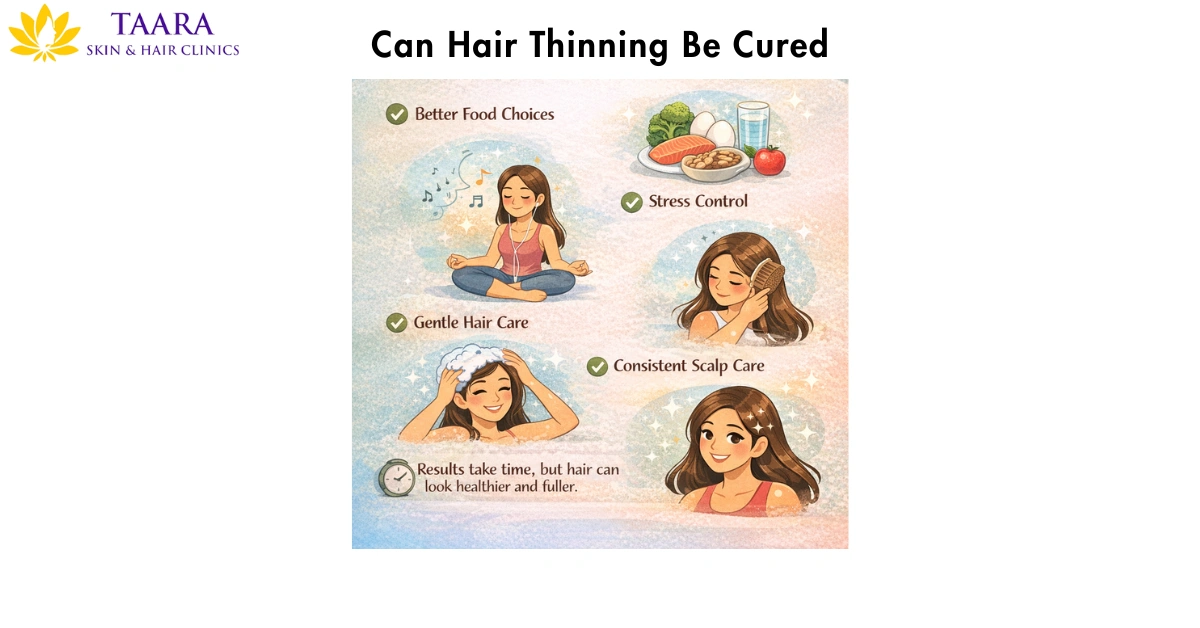
Hair thinning is often easier to manage than hair loss. Early care can improve hair quality.
What Helps Improve Hair Thickness
People often see improvement with:
- Better food choices
- Stress control
- Gentle hair care
- Consistent scalp care
Results take time, but hair can look healthier and fuller.
When You Should Take Hair Changes Seriously
Waiting for a longer time can make your problem harder to manage. So trying to take early action always gives better results.
Clues You need to visit the doctor
You should seek guidance if:
- Hair keeps getting thinner.
- Hair fall increases suddenly.
- The scalp becomes more visible.
- No change after basic care.
- Timely care helps protect existing hair.
Common Areas Where Hair Thinning Shows First
Hair thinning does not happen all over the head at once. It usually starts in specific areas. Knowing these areas helps you notice the problem early.
Where Hair Thinning Usually Starts
Doctors often see thinning in these spots:
- Around the crown or top of the head
- Hair parting becomes wider than before
- Front hairline may stay the same initially
- Sides and back are usually less affected
Just Paying attention to these areas which can help you to choose the right hair thinning treatment early.
How Stress and Hair Thinning both are related
Mainly stress impacts the body in many ways, and hair shows the effects early. During high stress, hair growth reduces and the strands become weaker over time.
Ways Stress Causes Thinning
Hair doctors notice these patterns:
- Stress pushes hair into resting phase
- Hair fall can be seen mostly during washing or brushing
- Hair looks dull and loses shine
- Thinning happens over several months
Even small lifestyle changes to reduce stress can improve hair health gradually.
Diet and Hair Health
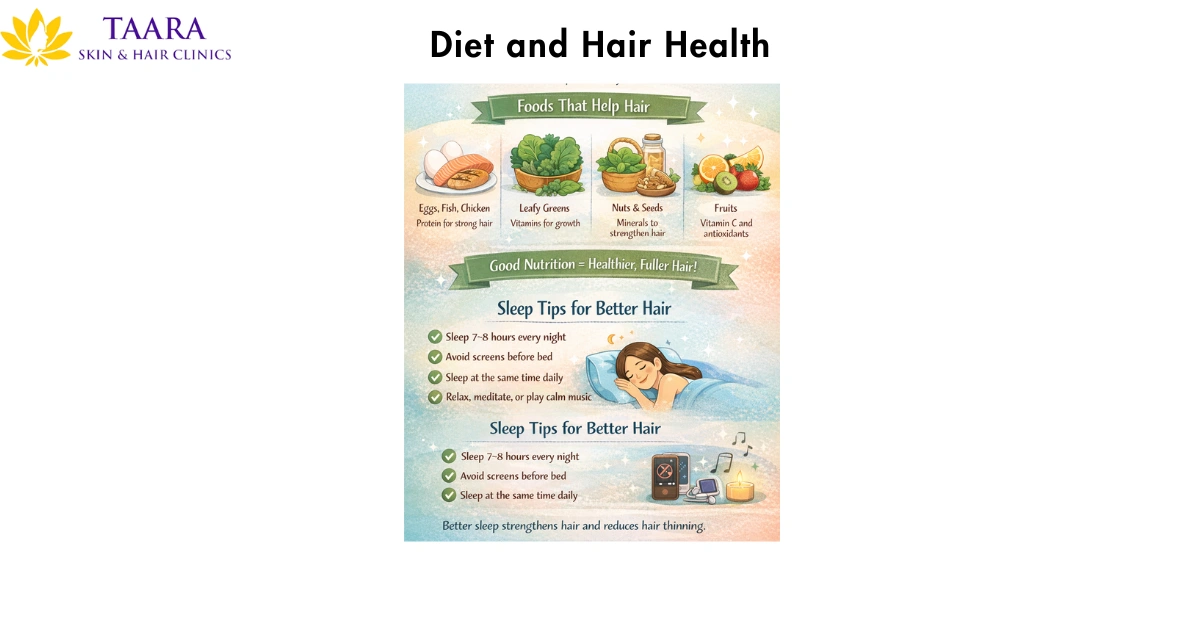
Hair needs proper nutrition to grow strong. Many people eat well but still they lack more nutrients that affect hair. Missing key nutrients slowly makes hair thinner.
Foods That Help Hair
Doctors suggest to include the right food which plays an important role in hair recovery and for hair growth.
- Eggs, fish, and chicken give protein that helps make hair strong.
- Green leafy vegetables give vitamins for healthy hair growth.
- Nuts and seeds give minerals that feed and strengthen hair.
- Fruits give vitamin C and antioxidants that protect hair roots.
Eating these foods often helps support thinning hair treatment and keeps hair healthy.
Sleep Tips for Better Hair
Simple sleep habits can improve hair:
- Sleep at least for 7-8 hours every night
- Do not watch mobile before bed
- Sleep at the same time every day.
- Relax with meditation or calm music
Better sleep reduces thinning and supports hair growth.
Lifestyle Habits That Protect Hair
Daily habits play a big role in hair health. Small mistakes over time can make hair look thin and weak.
Good Habits to Follow
Hair specialists recommend:
- Gentle brushing and combing
- Avoid tight hairstyles
- Limit heat styling tools
- Keep scalp clean but not overwashed
Consistent good habits work with hair thinning treatment to strengthen hair.
Emotional and Confidence Impact
If your hair starts to fall, it can adversely affect your confidence, self-esteem, and socializing; some may feel embarrassed or ashamed to take pictures because they are starting to lose hair.
Dealing With Emotional Stress
Doctors often advise:
- Discuss hair issues with honesty.
- Do not blame yourself or make comparisons to others.
- Concentrate on those factors you can control such as; hair care, nutrition and lifestyle.
Follow your hair care regimen consistently and maintain your treatment program. Caring for your mental well-being helps hair respond better to treatment.
Home Care Tips That Actually Help
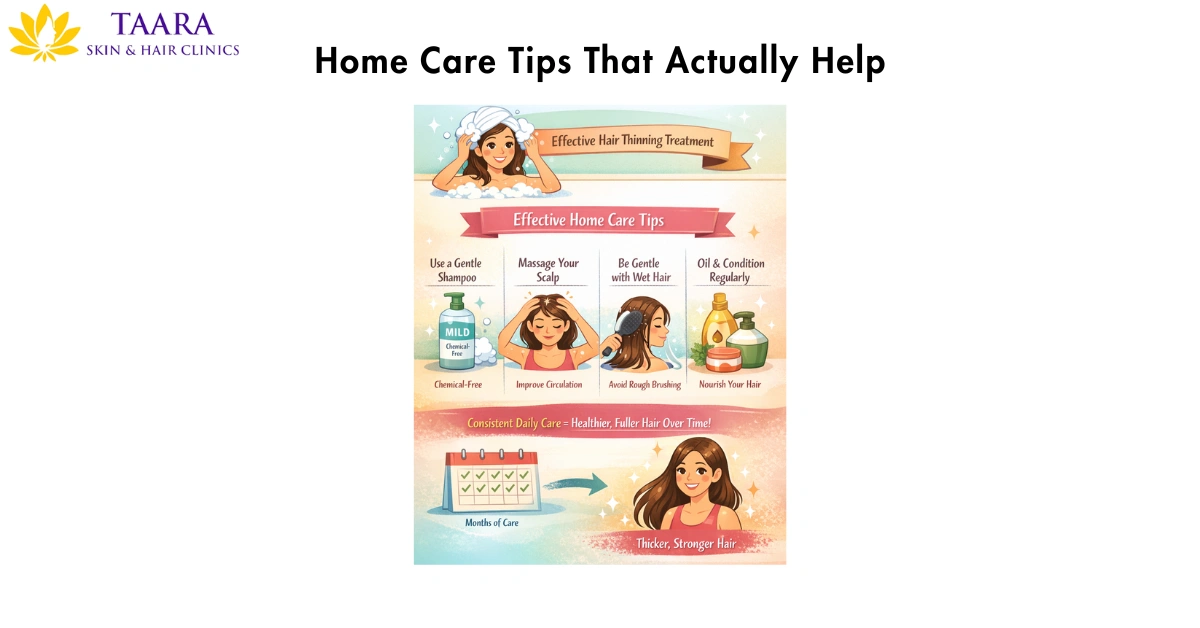
Simple care routines can reduce hair thinning and prevent progression. Many people waste time on random remedies that do not work.
Effective Home Care Tips
Hair specialists recommend:
- Use a gentle, mild shampoo that is free of chemicals.
- Gently massage the scalp in order to improve the blood circulation in your head.
- When brushing out your hair after a shower avoid using forceful strokes on damp hair.
- Use good quality hair oil and conditioner frequently.
The effectiveness of some simple daily routines can have an extremely positive effect over time, when performed consistently for several months.
When to See a Doctor for Hair Thinning
Hair thinning may look like a small issue, but the guidance gives the right treatment. Delaying consultation can make your hair thinning worse.
Signs You Should See a Hair Specialist
See a Hair Doctor If:
- Thinning keeps increasing
- Hair fall becomes heavy or uneven
- Scalp is clearly visible
- No improvement with good home care
Doctors can recommend hair thinning treatment based on cause, diet, and lifestyle.