Itchy scalp is something many people do not take seriously in the beginning. They often delay proper itchy scalp treatment, thinking the problem will settle on its own. Over time, the itching increases and may start affecting hair health. It starts small. Sometimes this itching happens only after your hair wash. Sometimes this happens only when sweating more. Some days you just feel this is normal, some days it feels irritating. Because of this only, people think it is not a big issue.
Most people feel itching is normal. They feel it will settle if they oil more or change shampoo. Some think it is because of dry skin. Some feel it is dandruff and nothing else. So they ignore it and continue with their routine. But slowly, things start changing.
This blog is written to explain this connection in a simple way. Not in a dramatic way. Not with miracle promises. Only based on what doctors actually see in daily practice.
Understanding the Link Between Itchy Scalp and Hair Fall
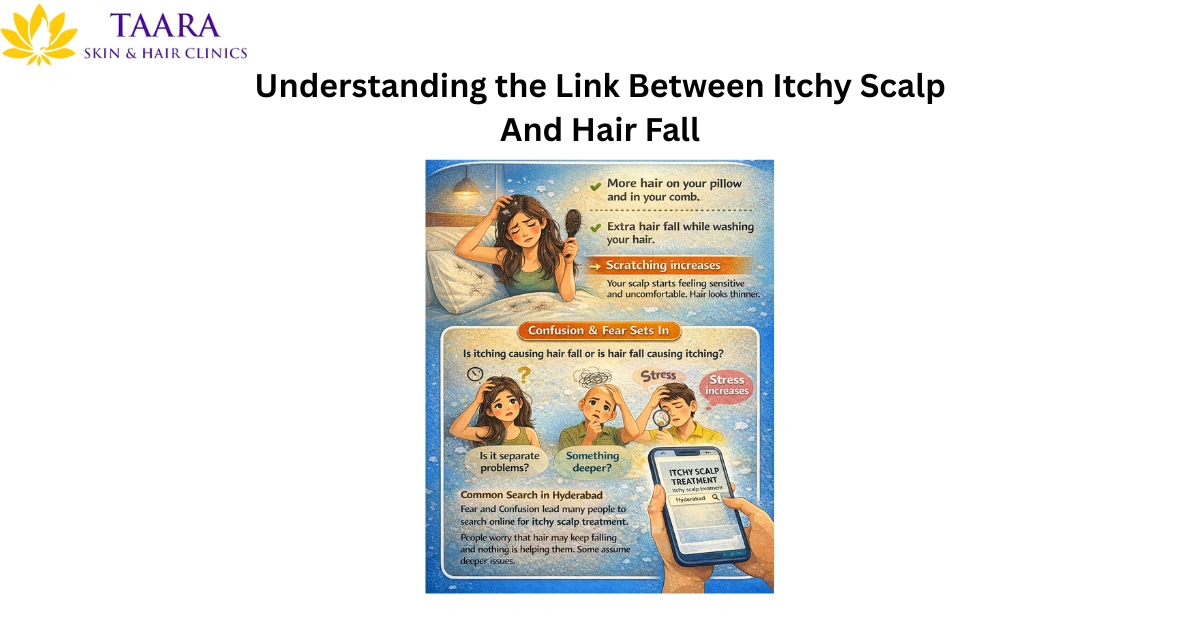
Hair fall begins to increase, observe on pillow increases and while washing increases. When combing, more strands come out. Scratching also becomes more frequent. Many people scratch without even realising. After some time, the scalp may start to feel sensitive and uncomfortable. The hair may also feel thinner than before.
At this stage, confusion starts. People start thinking whether itchy scalp is causing hair fall or hair fall is causing itching. Some feel both are separate problems. Some feel something deeper is wrong. Because answers are not clear, stress also increases, which again affects scalp.
This is when many people in Hyderabad search online using one common line again and again: itchy scalp treatment. This search is not just about itching. It is about fear that hair may continue falling and nothing is working.
Why Itchy Scalp Is Ignored Most of the Time
Itchy scalp usually does not start suddenly in a severe way. It builds slowly.
At first, there may be:
- Mild itching once or twice a day
- Slight flakes sometimes
- Dry or tight scalp feeling
- Mild redness in small areas
Because pain is not there, people do not take action. They try small things. Changing shampoo. Using more oil. Applying home remedies. Listening to friends or internet advice. Sometimes itching reduces for a few days. People feel the problem is solved. But after some time, itching comes back again. This is where the cycle starts.
When scalp irritation stays for weeks or months, it does not remain only on the surface. Slowly, hair roots also get affected. Hair fall increases gradually, not suddenly. That is why many people realise it late.
Itchy Scalp Is Not Only a Cleaning Problem
Many people think itchy scalp happens only if hair is not washed properly. This is not fully correct. Doctors see itchy scalp even in people who wash their hair regularly. It can happen because of many reasons.
Common medical reasons include:
- Scalp inflammation
- Fungal imbalance
- Sensitivity to products
- Too much oil or too much dryness
- Skin conditions of scalp
When itching continues, it means scalp balance is disturbed. A healthy scalp protects hair roots. An unhealthy scalp weakens them. If the scalp condition is not treated properly, hair follicles slowly lose strength. Hair fall increases. Hair growth becomes slow. This is why dermatologists treat itchy scalp as a medical issue, not just a cosmetic one.
Hyderabad Factors That Make Itchy Scalp Worse
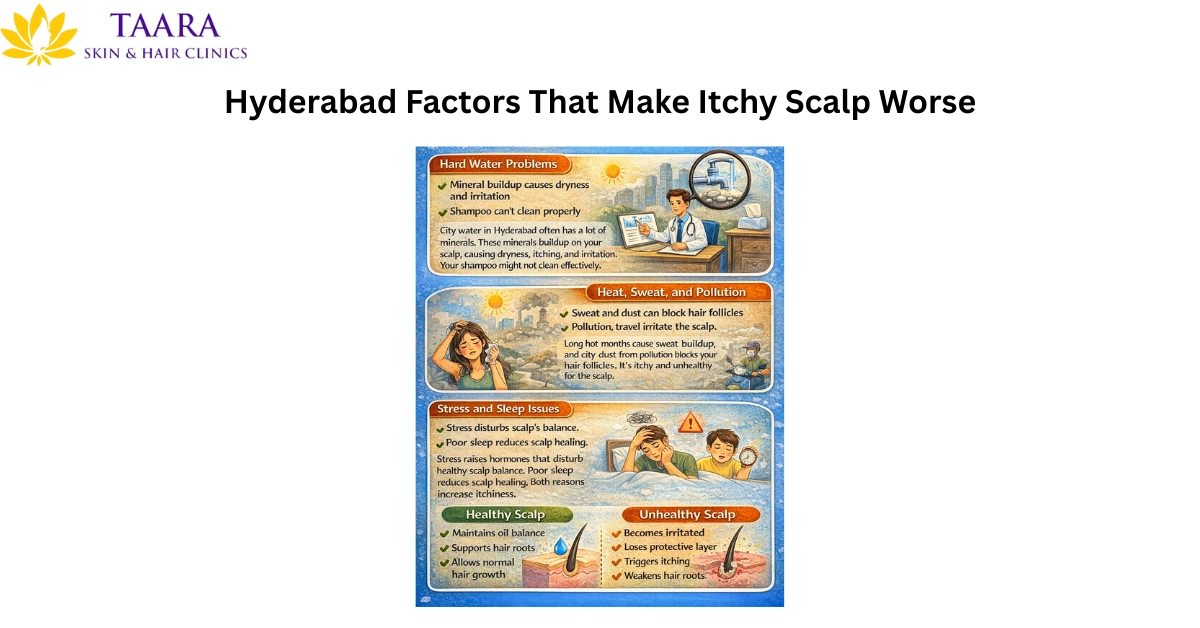
Doctors in Hyderabad see some very common city-related reasons behind scalp itching. One major reason is hard water. Minerals present in water slowly build up on the scalp. This is the main cause of dryness, itching, and irritation. Shampoo does not clean properly when a mineral layer forms. Many people notice itching started or increased after changing home or water source.
How Climate, Pollution, and Lifestyle Affect Your Scalp
Another big factor is heat and sweating. The Hyderabad climate stays hot for long months. Sweat accumulates on the scalp. Sweat mixes with oil and dust. This blocks hair follicles and irritates the scalp. To manage sweat, people wash hair more often. This again removes natural oils and makes the scalp sensitive.
Pollution and daily travel also affect the scalp. Dust settles on my scalp every day. Pollution causes inflammation. This damage builds slowly, so people do not notice immediately. Stress and sleep problems play a strong role. Stress increases hormone levels that disturb skin balance. Poor sleep reduces the healing capacity of the scalp. Over time, itching becomes frequent and hair fall increases.
Understanding Scalp Before Treating Itching
The scalp is skin. It mainly reacts to lifestyle along with environment, health, and routine.
Healthy scalp:
- Maintains oil balance
- Supports hair roots
- Allows normal hair growth
Unhealthy scalp:
- Becomes irritated
- Loses protective layer
- Triggers itching
- Weakens hair roots
Treating itching without understanding the scalp condition only gives temporary relief. Real improvement happens only when the scalp environment becomes healthy again.
How Itchy Scalp Leads to Hair Fall
Itchy scalp and hair fall are connected more than people realise. Continuous scratching damages the scalp surface. Inflammation weakens hair follicles. Infections disturb the hair growth cycle. Blood flow to roots reduces. Because of this, more hair enters the shedding phase. At the same time, regrowth slows down. This imbalance happens slowly over months. One day, people suddenly realise their hair density has reduced.
What Actually Works in Itchy Scalp Treatment (Doctor’s View)
Proper itchy scalp treatment always starts with understanding the cause.
Doctors look at:
- Type of itching
- Scalp condition
- Hair fall pattern
- Duration of problem
- Lifestyle habits
Without diagnosis, treatment becomes guessing.
Effective Scalp Care: Treatments, Therapies, and Lifestyle Tips
Medicated shampoos and lotions which are given by doctors help to reduce scalp irritation and balance problems. These treatments work only if they are used the right way and for enough time.
In some cases, infection or severe inflammation needs medical treatment. Scalp therapies help improve blood circulation and healing. They support recovery but cannot work alone. Lifestyle guidance is also important. Washing pattern, oil usage, stress control, sleep, and hydration all matter.
What Usually Does Not Work
Over-oiling, scratching for relief, changing products again and again, and depending only on home remedies usually make the problem worse. These methods treat symptoms, not the cause. Instant relief promises also create wrong expectations. The scalp takes time to heal.
Why Itching and Hair Fall Keep Coming Back
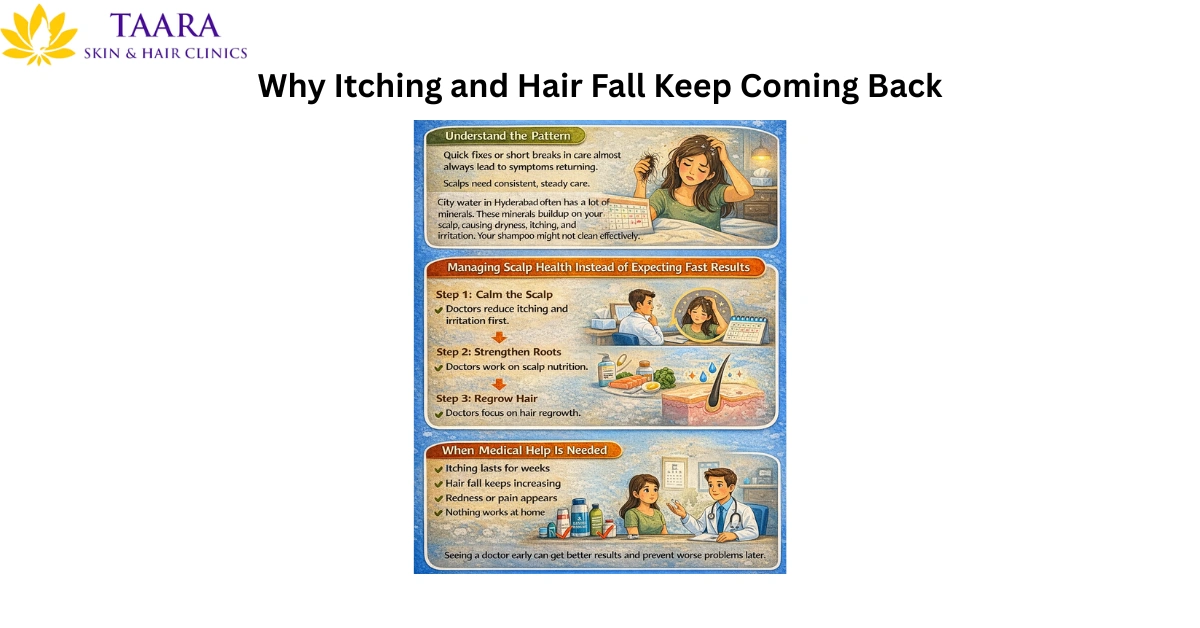
When itching returns again and again, it usually means the root cause was not treated or treatment was stopped too early. Scalp health needs consistency. Short-term care never gives long-term control. Managing Scalp Health Instead of Expecting Fast Results
Doctors first focus on calming scalp irritation. Then they work on strengthening hair roots. Regrowth comes later. When steps are skipped or rushed, disappointment happens.
When Medical Help Is Needed
Doctor consultation is important if itching lasts for weeks, hair fall keeps increasing, redness or pain appears, or nothing works at home. Early treatment always gives better control.
Final Perspective: Understanding Comes First
Don’t Ignore Itchy scalp, Mainly when the hair fall is present. Using too many products and changing routines frequently only delays improvement. So effective itchy scalp treatment depends on understanding the main cause, following these medical guidance, and being patient. When scalp health improves, itching reduces and hair fall becomes manageable.