Hair loss after pregnancy is one thing that many women do not expect, and most women face this issue. Effective postpartum hair loss treatment can help restore hair and confidence.They prepare themselves for body changes, weight gain, stretch marks, tiredness, sleep loss. But when hair starts falling in handfuls, it comes as a shock. Some women notice it while washing their hair and few see hair on the pillow. Some feel hair coming out even with light combing.
At first, many ignore it. They think it will stop on its own. People around say the same thing. “It happens after delivery.” “Hair will come back.” “Don’t worry too much.” But weeks pass. Months pass. Hair keeps falling.
Slowly the ponytail becomes thinner. Parting looks wider. Mainly hair does not feel the same anymore. For many women, this becomes a stressful thing, especially when they are already emotionally and physically tired after the childbirth.
This is when women start searching for postpartum hair loss treatment. Not because of beauty alone, but because something does not feel right. Hair loss after pregnancy is common, but it is not always simple.
Why Hair Loss Starts After Delivery
During pregnancy, hormones behave differently. Estrogen stays high. Because of this, hair does not fall as much. Hair stays longer in the growth phase. Many women feel their hair is thicker during pregnancy.
After delivery, hormone levels suddenly change. Estrogen drops. Hair that was holding on starts shedding together. This causes heavy hair fall.
Doctors call this postpartum hair shedding. But just calling it hormonal does not explain everything. Because not all women lose hair the same way.Not all women recover the same way.
Why Hair Loss After Pregnancy Feels Worse Than Normal Hair Fall
Hair fall after delivery feels worse because it happens together. A lot of hair enters the shedding phase at the same time. So the amount looks scary. Also, new mothers are already under stress. Sleep is broken. My body is recovering. Nutrition is not always proper. All these things affect hair.
Doctors often see women who had mild hair issues before pregnancy. Pregnancy hides those problems for some time. After delivery, those hidden problems come out stronger. So pregnancy does not always cause hair loss. Sometimes it only exposes it.
Hair Loss After Pregnancy Is Not Only Hormones
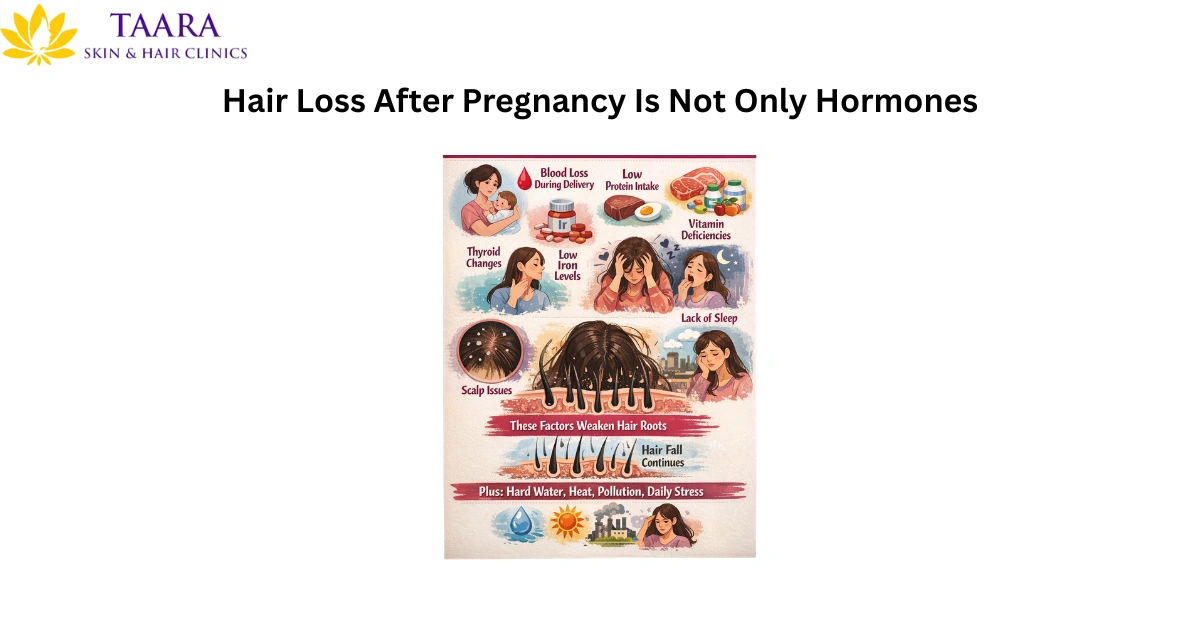
Many women believe hormones are the only reason. Because of this, they do nothing and wait. This waiting often makes the problem worse.
Hair loss after pregnancy is also affected by:
- Blood loss during delivery
- Low iron levels
- Low protein intake
- Vitamin deficiencies
- Thyroid changes
- Emotional stress
- Lack of sleep
- Scalp issues
These things do not act separately. They work together. Hair roots slowly become weak. Hair fall continues. In Hyderabad, doctors also notice that hard water, heat, pollution, and daily stress make postpartum hair loss worse.
How Postpartum Hair Loss Shows Up
Not all women see hair loss in the same way.
- Some see sudden heavy shedding.
- Few of them see thinning on the crown.
- Some feel scalp itching.
- Another few notice dryness and breakage.
- Some feel hair never grows back the same.
Many women feel their scalp becomes sensitive after delivery. Dandruff increases. Sweat and heat irritate the scalp more. These signs show that scalp health is also involved, not just hair strands.
Why Some Women Recover and Others Don’t
Doctors often get this question: “My friend had hair loss after pregnancy, but it stopped. Why is mine not stopping?”
Recovery depends on many things:
- Hair health before pregnancy
- Nutrition during and after pregnancy
- Stress levels
- Medical conditions
- Consistency of care
Women who already had weak roots or genetic sensitivity may not recover fully without treatment. Waiting too long also affects recovery.
Understanding Hair Growth Before Treating Hair Loss
Hair grows in cycles:
- It starts to grow.
- Take a rest.
- It sheds.
After pregnancy, more hair enters the shedding phase. The goal of treatment is not to stop hair fall immediately. That is not possible.
Doctors first try to reduce excessive shedding
Then they try to protect existing hair, slowly supporting regrowth and this takes time. Many women stop treatment early because they expect fast regrowth. Hair does not work like that.
What Doctors Actually Do for Postpartum Hair Loss Treatment
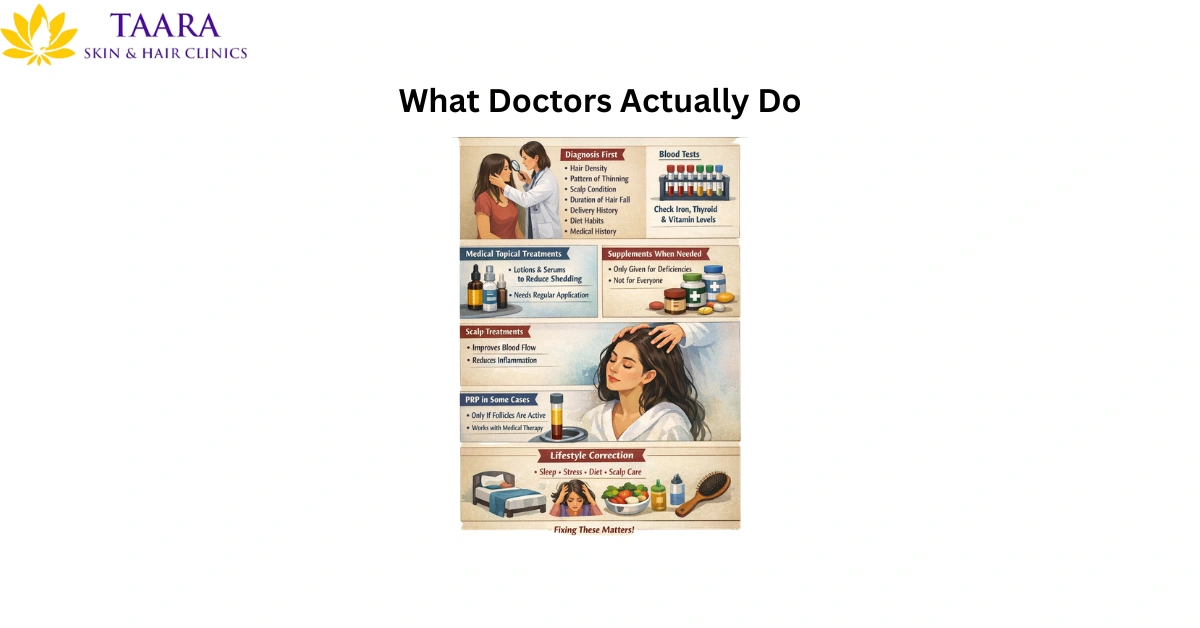
Doctors do not give the same treatment to everyone.
- First comes diagnosis.
- They look at:
- Hair density
- Pattern of thinning
- Scalp condition
- Duration of hair fall
- Delivery history
- Diet habits
- Medical history
Sometimes blood tests are advised. Especially to check iron, thyroid, and vitamin levels. Without this, treatment becomes guessing.
Medical Topical Treatments
Doctors may prescribe lotions or serums to reduce shedding and strengthen roots. These treatments need regular use. Missing applications delays results. Using randomly does not help.
Supplements When Needed
Supplements are not given blindly. Doctors suggest them only when deficiency is seen. Taking unnecessary supplements can cause imbalance.
Scalp Treatments
Scalp therapies help improve blood flow and reduce inflammation. They support treatment. They are not magic solutions.
PRP in Some Cases
PRP is suggested only when hair follicles are active. It works better when combined with medical treatment. It does not work for everyone.
Lifestyle Correction
Doctors talk about sleep, stress, diet, and scalp care. Without fixing these, treatment response becomes slow.
What Does Not Work in Postpartum Hair Loss
Doctors often see women trying many things that do not help.
- Over-oiling
- Heavy oils block follicles.
- Changing products again and again
- Hair needs time.
- Home remedies for long-term hair loss
- They help mild issues only.
- Instant regrowth promises
- Hair regrowth is slow.
Why Hair Loss Continues Even After One Year
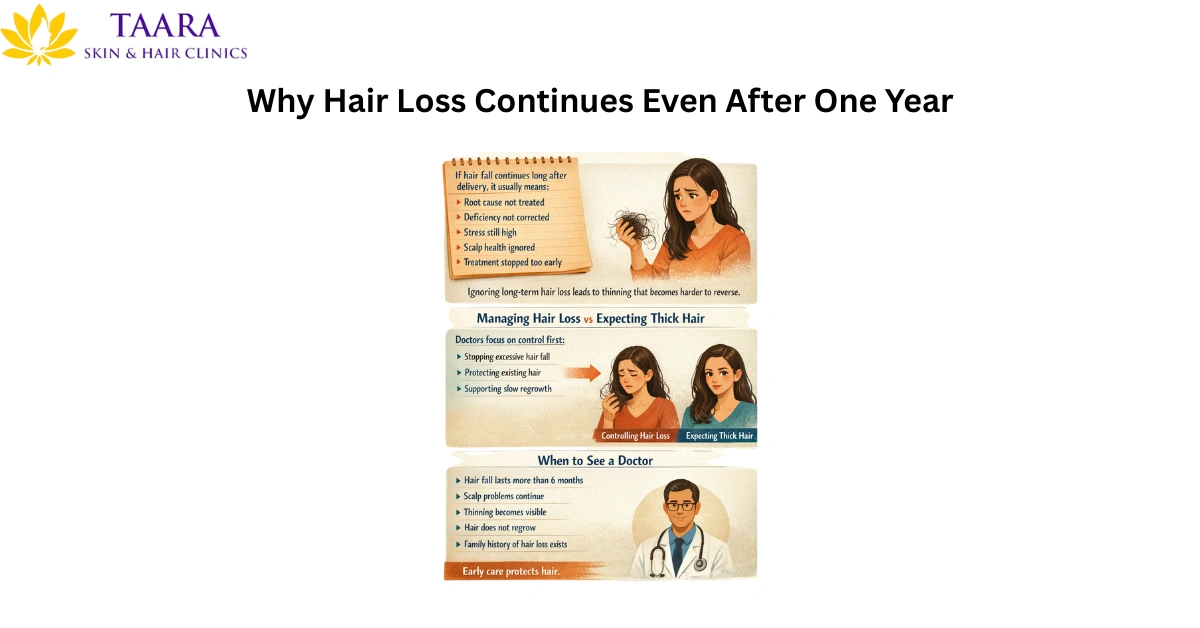
If hair fall continues long after delivery, it usually means:
- Root cause not treated
- Deficiency not corrected
- Stress still high
- Scalp health ignored
- Treatment stopped too early
Ignoring long-term hair loss leads to thinning that becomes harder to reverse.
Managing Hair Loss vs Expecting Thick Hair
- Doctors focus on control first.
- Stopping excessive hair fall.
- Protecting existing hair.
- Supporting slow regrowth.
- This order matters.
When to See a Doctor
Medical help is needed if:
- Hair fall lasts more than 6 months
- Scalp problems continue
- Thinning becomes visible
- Hair does not regrow
- Family history of hair loss exists
- Early care protects hair.
Final Thoughts on Postpartum Hair Loss
Hair loss after pregnancy is common, but it should not be ignored. Waiting and guessing often makes it worse. Using many products together does not solve the problem. It usually delays improvement.
The right way is understanding the cause first. Hair loss after pregnancy can be due to hormones, deficiencies, stress, scalp issues, or a mix of all. Hair recovery is slow. Many women quit early because they expect fast results. Hair needs time.
Doctor guidance helps to choose the right and best treatment. Not everyone needs the same process. Here Consistency matters the most. Treatments work only when you follow properly. When postpartum hair loss is treated with clarity and patience, results are better. Hair becomes stronger. Shedding reduces. Long-term control becomes possible.
Take the Right Step for Postpartum Hair Loss Treatment in Hyderabad If hair loss after pregnancy is worrying you and nothing is helping, stop guessing.Get a personalised postpartum hair loss treatment plan designed for Hyderabad’s water, climate, and lifestyle.
“Consult an experienced hair specialist at Taara Clinics.”