Scalp problems usually start very small. Most people do not even take them seriously in the beginning. In many cases, people delay proper scalp infection treatment because the symptoms look mild at first. A little itching and few are flakes, some are red spots. Occasional pimples on the scalp,People think it is dandruff or they think it is because of weather. Some feel it is due to stress or late nights.
So they ignore it.Hair fall at that stage is usually normal, so nobody connects the two. But slowly, over weeks and months, the scalp condition does not go away. It stays. Sometimes it becomes worse. Hair starts falling more than before and the scalp feels uncomfortable.
Combing becomes painful for some people. Scratching becomes like a habit without realising it. At this stage, many people search for treatment like scalp infection treatment, but still hesitate to see a doctor. They hope it will settle on its own.
“This blog is written to explain when scalp problems are harmless and when they need medical attention, especially when hair fall is involved.”
Why Scalp Infections Are Often Not Taken Seriously
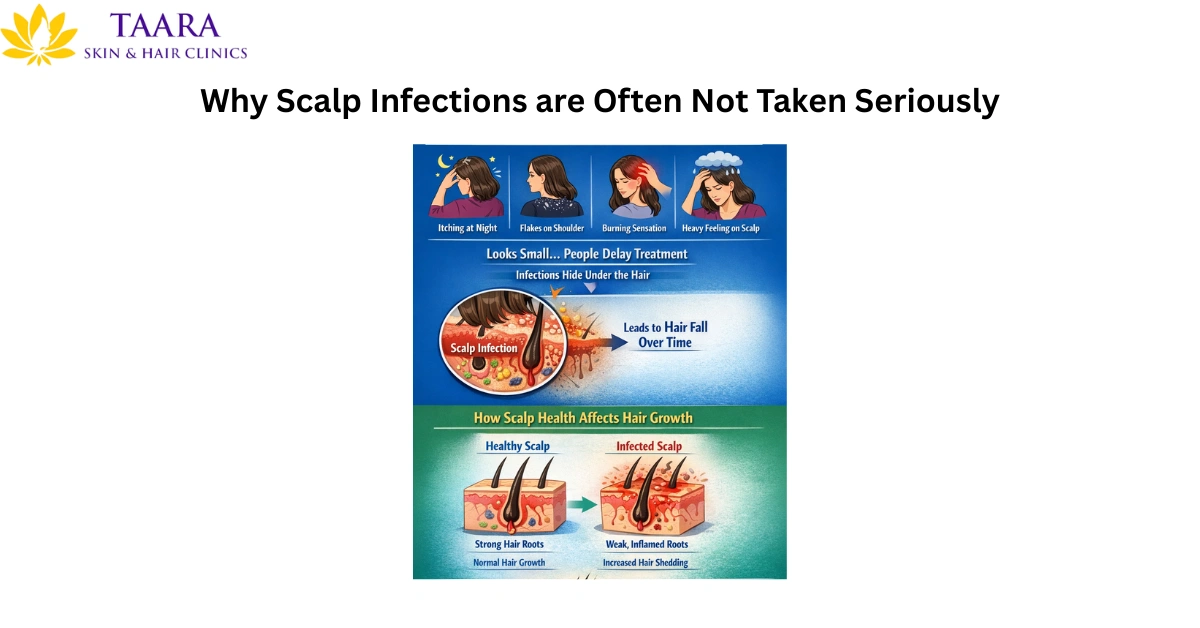
The scalp is not visible like the face. Because of hair, most scalp changes are hidden.
People notice:
- Itching at night
- Flakes on the shoulder
- Slight burning after washing
A feeling of heaviness on the scalp and these signs look small. So people delay treatment and many believe washing more will fix it. Some start oiling daily, others keep changing shampoos every few weeks. The problem is, scalp infections do not behave like dry skin.They do not improve with random changes. By the time hair fall becomes noticeable, the infection has usually been present for a long time.
How Scalp Health Affects Hair Growth
Hair does not grow separately from the scalp. Hair roots sit inside the scalp area.
When the scalp is healthy:
- Hair roots stay strong
- Hair growth cycle stays normal and hair fall also.
- When the scalp is infected or inflamed:
- Roots become weak
- Hair sheds faster
- New hair growth slows down
This is why doctors always look at the scalp first when someone comes with hair fall complaints. Treating hair fall without checking scalp health often gives poor results.
Common Scalp Infections seen by Hair Doctors
Don’t look all scalp problems are the same, some are different. Doctors see different types, and each behaves differently.
Common Fungal Conditions of the Scalp
You can see fungal infections are very common in cities like Hyderabad.
People notice:
- Severe itching
- Thick, sticky flakes
- Red patches
- Hair breakage
Sometimes small bald-looking areas. Sweat, heat, and humidity make this fungal infections worse. Using oil on an infected scalp often increases the problem.
Bacterial Scalp Infections
These usually appear as:
- Painful pimples
- Boils
- Swelling
- Oozing or crusting
Scratching spreads the infection and hair fall increases around those areas. Many patients feel pain while combing or washing.
Inflammatory Scalp Conditions
Some scalp conditions are not infections but still it cause the damage.
Few Examples include:
- Seborrheic dermatitis
- Chronic dandruff
- Psoriasis
These are the conditions create constant inflammation. Hair roots remain under stress, which leads to continuous hair fall and also causes damage to hair.
Why Scalp Infections Are Common in Hyderabad
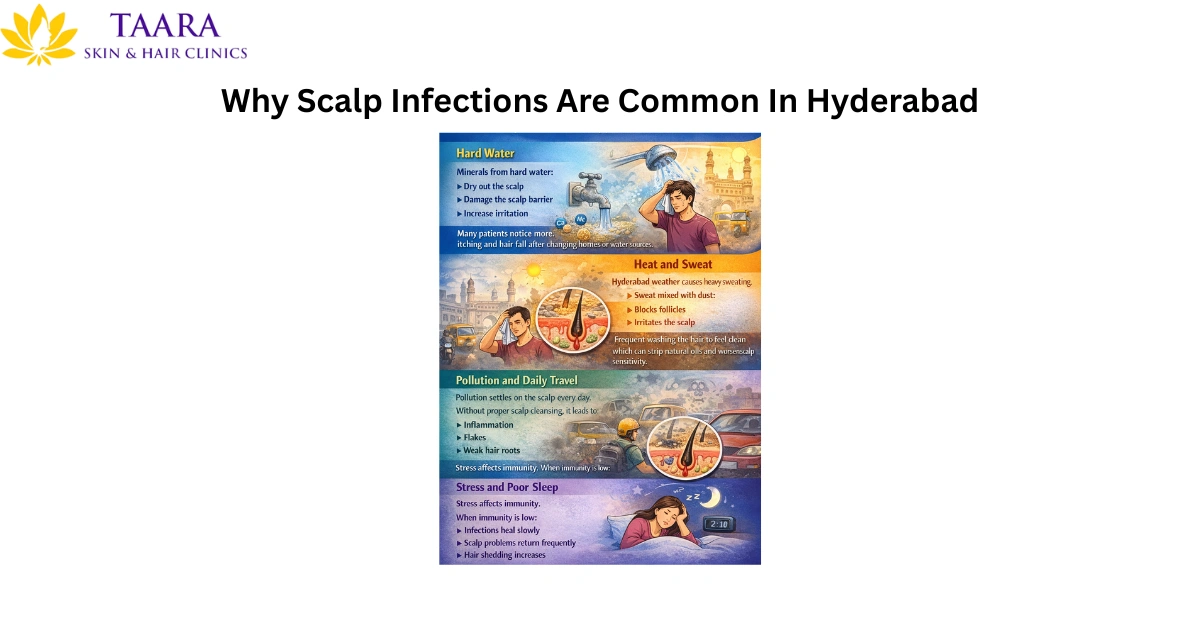
Doctors in Hyderabad usually see the scalp problems that are related to local factors.
Hard Water
- Hard water is a common issue.
- Minerals from hard water:
- Dry out the scalp
- Damage the scalp barrier
- Increase irritation
Many patients notice more itching and hair fall after changing homes or water sources.
Heat and Sweat
Hyderabad weather causes heavy sweating.
Sweat mixed with dust:
- Blocks follicles
- Irritates the scalp
- Encourages infection growth
Frequent washing the hair to feel clean which can strip natural oils and worsen the scalp sensitivity.
Pollution and Daily Travel
Pollution settles on the scalp every day.
Without proper scalp cleansing, it leads to:
- Inflammation
- Flakes
Weak hair roots
Stress and Poor Sleep
- Stress affects immunity.
- When immunity is low:
- Infections heal slowly
- Scalp problems return frequently
- Hair shedding increases
How Scalp Infections Cause Hair Loss
Scalp infections affect hair slowly.
They:
- Weaken hair roots
- Disrupt hair growth cycle
- Increase shedding phase
- Reduce regrowth speed
Hair loss is usually less, but not sudden. This makes it harder for people to connect it to scalp infection.
Why Home Remedies Do Not Solve Scalp Infections
Many people try:
- Aloe vera
- Lemon
- Onion juice
- Oils
- DIY masks
These may reduce itching for some time. But they do not clear infection. In some cases, they irritate the scalp further and Persistent scalp infections need medical treatment, not experiments.
What Doctors Do for Scalp Infection Treatment
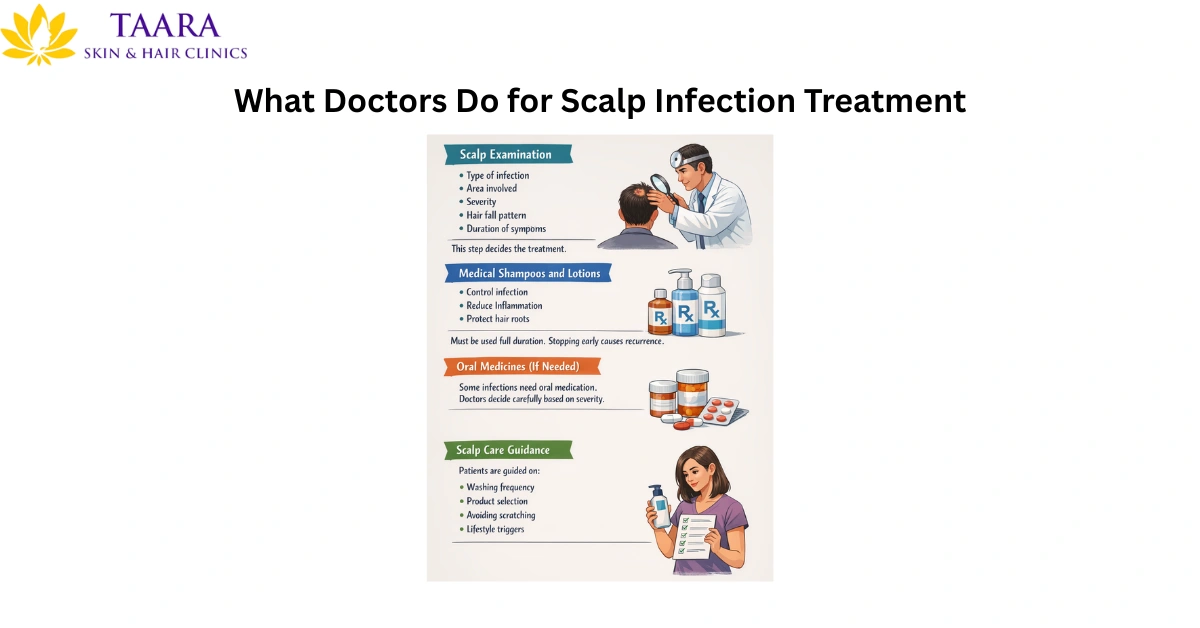
Doctors do not treat scalp problems blindly.
Scalp Examination
Doctors check:
- Type of infection
- Area involved
- Severity
- Hair fall pattern
- Duration of symptoms
This step decides the treatment.
Medical Shampoos and Lotions
Prescription treatments help:
- Control infection
- Reduce Inflammation
- Protect hair roots
They must be used for the full duration and stopping early causes recurrence.
Oral Medicines
Some infections need oral medication. Doctors decide this carefully based on severity.
Patients are guided on:
- Washing frequency
- Product selection
- Avoiding scratching
- Lifestyle triggers
Why Hair Fall Improves Only After Infection Is Controlled
Hair fall treatments do not work properly if infection is active.
Once the scalp becomes healthy:
- Hair shedding reduces
- Roots recover
- Regrowth slowly starts
- This process takes time.
When You Must See a Hair Doctor
- You should consult a hair doctor if:
- Itching lasts more than 2 weeks
- Painful scalp lesions appear
- Hair fall increases suddenly
- Bald patches are seen
- Home remedies fail
The problem keeps returning and early treatment protects hair roots.
Can Hair Grow Back After Scalp Infection
In most cases, yes.
Regrowth depends on:
- How early treatment started
- Infection severity
- Damage to hair follicles
- Delayed care can lead to slower recovery.
Scalp Infection Is Not Just Dandruff
- Dandruff is usually mild and temporary.
- Scalp infection is persistent and damaging.
- Treating both the same way delays recovery.
Preventing Scalp Infections for Long-Term Hair Health
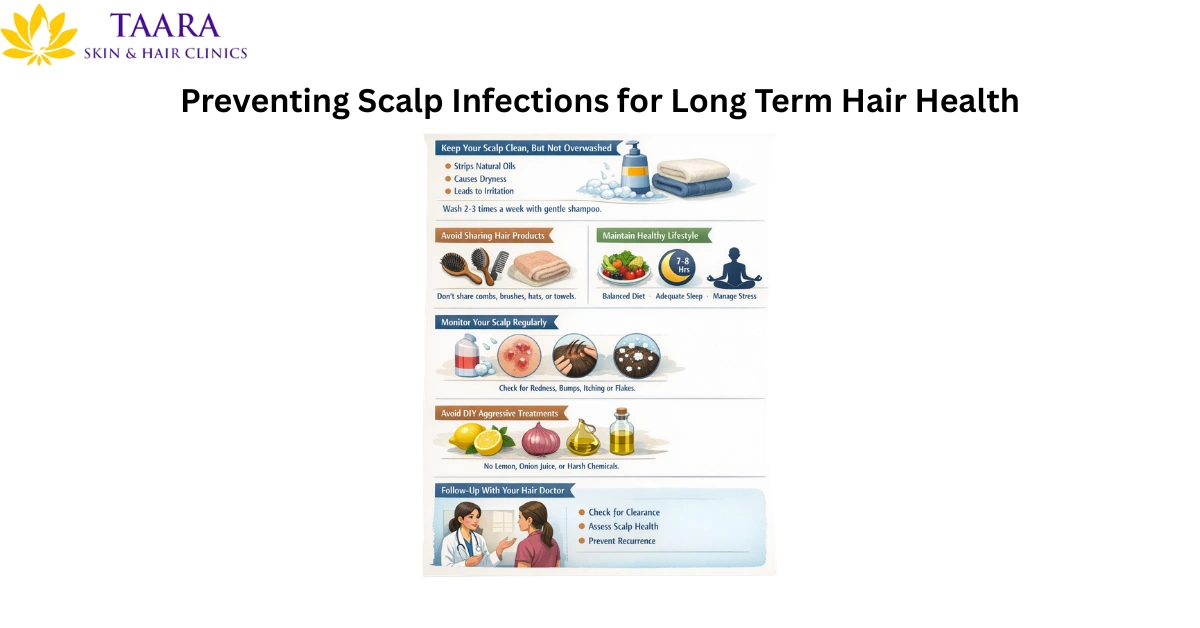
Scalp infections usually come back if proper care is not followed properly. Doctors at Taara Clinics always emphasize prevention along with treatment.
Keep Your Scalp Clean, But Not Overwashed
Washing scalp frequently with harsh shampoos may seem good, but it can:
- Strip natural oils
- Make scalp dry
- Encourage irritation
Doctors suggest gentle cleansing, 2-3 times a week, depending on scalp type and sweating. Avoid harsh scrubbing or using multiple shampoos at once.
Avoid Sharing Hair Products
Sharing combs, brushes, hats, or towels can spread fungal and bacterial infections. Even small germs can start an infection in an already weak scalp.
Maintain Healthy Lifestyle
Stress, late nights, poor diet, and lack of sleep increase the chances of scalp infection.
Doctors recommend:
- Balanced diet rich in proteins and vitamins
- Adequate sleep (7-8 hours)
- Regular stress management (walks, meditation, hobbies)
Monitor Your Scalp Regularly
- Check your scalp weekly:
- Any new redness
- Pimples or bumps
- Itching or flakes
Early recognition of symptoms helps prevent worsening hair loss.
Avoid DIY Aggressive Treatments
Many people try:
- Lemon
- Onion juice
- Strong oils or chemical treatments
These may irritate the scalp further. Doctors emphasize: “Do not experiment when infection is suspected.”
Follow-Up With Your Hair Doctor
Even after treatment, follow-up appointments are important:
- To ensure infection is cleared
- To check scalp health
- To prevent recurrence
A doctor can guide mild lifestyle adjustments, product use, and hair care routines specific to Hyderabad’s climate and water.
Final Understanding
Hair cannot grow Properly on an unhealthy scalp. Ignoring scalp infections allows hair fall to continue silently and Scalp infection treatment is not about quick relief. It is about restoring scalp health and protecting future hair growth. If scalp problems and hair fall are worrying you, stop guessing. Get a personalised scalp infection treatment plan designed for Hyderabad’s water, climate, and lifestyle. Just honest, doctor-guided scalp and hair care
“Take the Right Step for Scalp Infection Treatment.”
“Consult an experienced hair doctor at Taara Clinics.”.